

Minister refuses to revoke new legal aid fee system amid solicitor resignations
Translated from English, summarized and contextualized by DistantNews.
At a glance
News
Sources not specified
New plan
- Justice Minister Jim O'Callaghan will not revoke the new legal aid fee system for solicitors, despite pressure from the Law Society.
- Fifty-five solicitors have resigned from the criminal legal aid panel, citing financial unsustainability under the new fee structure.
- O'Callaghan defends the new system, stating it aims to expedite cases and offers a significant increase in payment compared to the old system, covering an average of five hearings.
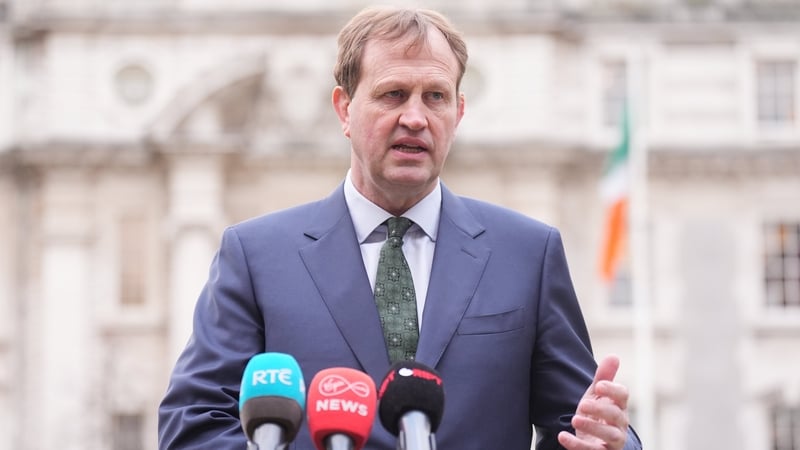
Justice Minister Jim O'Callaghan has firmly stated he will not revoke the recently implemented legal aid fee system for solicitors, despite facing significant pressure from the Law Society. The ongoing dispute centers on the new fees paid to solicitors for their work in the District Court, which has led to a substantial number of resignations from the criminal legal aid panel.
Some solicitors think that if they put enough pressure on the system to disrupt cases, that this is going to result in political pressure on me, and I'm going to revoke the regulations. That's not going to happen.
Last week, it was revealed that 55 solicitors have withdrawn from the panel, a move the President of the Law Society, Rosemary Loftus, described as a consequence of the new system making criminal legal aid practice financially unsustainable. Under the previous system, solicitors were compensated per court appearance, with initial fees set at €239.38 and subsequent hearings at €59.86. The current changes aim to address perceived issues within the old fee structure.
This is about recognising that the system needs to be improved, and a system which has a payment structure, which encourages adjournments because you get paid more through an adjournment, is going to encourage situations like that.
Minister O'Callaghan dismissed the idea that solicitors' actions would force a policy change, stating, "Some solicitors think that if they put enough pressure on the system to disrupt cases, that this is going to result in political pressure on me, and I'm going to revoke the regulations. That's not going to happen." He argued that the new system is designed to improve efficiency and prevent situations where payment structures might encourage adjournments.
What I'm trying to ensure is that cases are determined promptly in the district court. It is a court of summary jurisdiction. The old fee was €240 plus €60 for each adjourned hearing. I'm now providing €520, which is a significant increase.
"This is about recognising that the system needs to be improved," O'Callaghan explained. "What I'm trying to ensure is that cases are determined promptly in the district court." He highlighted that the new payment structure offers €520, a significant increase from the old system's €240 base fee plus €60 per adjourned hearing. This new rate accounts for five hearings, which he noted is the average number of hearings in criminal legal aid cases, aiming to encourage the swift resolution of simple cases.
Now that accounts for five hearings, and the average amount of hearings under the criminal legal aid scheme is five. So, the payment structure I'm putting in place now, I believe will encourage the quick determination of simple cases in the district court.
DistantNews Editorial
Originally published by RTÉ News in English. Translated, summarized, and contextualized by our editorial team with added local perspective. Read our editorial standards.
More Stories



From Our Blog

What Gets Lost (and Found) When News Is Translated

The Critical Role of Diaspora Media in Global News

What Travellers Should Know About Countries with Restricted Press

A Digital Nomad's Guide to Following Local News

How the Same Story Looks Different in Different Countries
