



Missed the solar eclipse? A lunar eclipse is coming
Translated from German, summarized and contextualized by DistantNews.
At a glance
News
Named sources
Context piece
- A partial lunar eclipse is expected on August 28, following other celestial events in August.
- The eclipse occurs when the Earth's shadow partially covers the moon, beginning around 4:34 AM.
- Observers are advised to find elevated spots and an early start is recommended for viewing the partial phase.
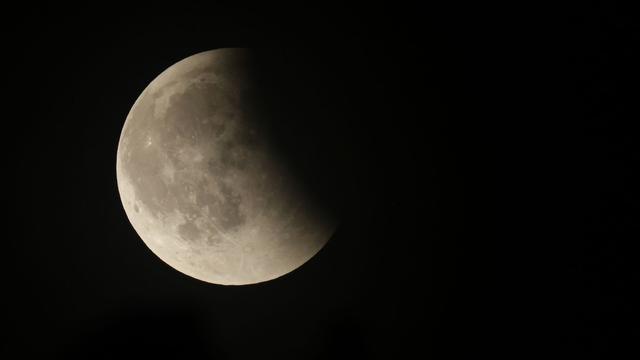
Stargazers have another celestial event to anticipate this August with a partial lunar eclipse set to occur in just a few days. This follows a period of notable astronomical occurrences, including a solar eclipse and meteor showers.
A lunar eclipse happens when the sun, moon, and Earth align, causing the Earth's shadow to fall upon the moon. In a partial eclipse, only a portion of the moon enters the Earth's umbra, or darkest shadow. According to Carolin Liefke, deputy head of the House of Astronomy in Heidelberg, the event begins on the morning of August 28 at 4:34 AM.
"One should get up early and, just as with the solar eclipse, find a raised spot," advised Liefke. She noted that the visibility improves the further west one resides. Unlike a solar eclipse, no special eyewear is needed to view a lunar eclipse.
Uwe Pilz, chairman of the Association of Friends of the Stars, mentioned that the partial phase, starting shortly after 4:30 AM, will be well-visible as the moon will be high in the sky during the dark of night. However, observing the maximum eclipse, which occurs shortly after 6 AM when up to 94 percent of the moon's diameter enters the Earth's shadow, will be difficult due to the moon's proximity to the horizon and sunrise. Despite these limitations, Pilz described the upcoming lunar eclipse as a "rewarding spectacle."
DistantNews Editorial
Originally published by Der Spiegel in German. Translated, summarized, and contextualized by our editorial team with added local perspective. Read our editorial standards.
More Stories

From Our Blog

What Gets Lost (and Found) When News Is Translated

How the Same Story Looks Different in Different Countries

The Critical Role of Diaspora Media in Global News

What Travellers Should Know About Countries with Restricted Press

A Digital Nomad's Guide to Following Local News
