

/nginx/o/2026/03/25/17528243t1hef76.jpg)
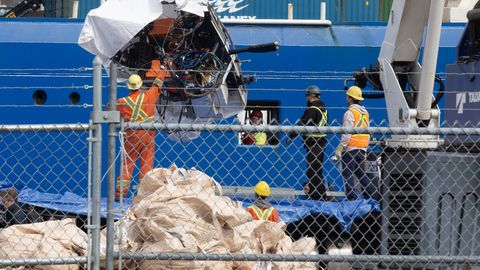
Moisture, Not Just Pressure, May Weaken Carbon Fiber for Deep-Sea Use
Translated from Estonian, summarized and contextualized by DistantNews.
At a glance
News
Named sources
Context piece
- Scientists are questioning the safety of carbon fiber in extreme deep-sea environments following the OceanGate Titan submersible disaster.
- Recent research suggests that prolonged exposure to moisture, not just pressure and temperature, can degrade carbon fiber's strength.
- This finding raises concerns about the material's suitability for future deep-sea exploration and construction.
Carbon fiber, a material lauded for its strength in aviation and Formula 1 racing, may pose unforeseen risks in the crushing depths of the ocean. The catastrophic implosion of the OceanGate Titan submersible has prompted scientists to scrutinize our understanding of how this high-strength composite behaves under extreme conditions.
New research from Australian engineers points to a surprising culprit in the material's potential failure: moisture. Beyond the well-known factors of pressure and temperature, the study suggests that the slow, persistent degradation caused by water over years could be a critical vulnerability.
This discovery challenges the assumption that carbon fiber remains impervious to environmental factors in deep-sea applications. The findings raise significant questions about the long-term integrity of structures built with this material when subjected to prolonged immersion in saltwater.
The implications are profound for future deep-sea endeavors. If moisture significantly weakens carbon fiber over time, it could place strict limits on the depth and duration of submersible missions and potentially impact the design of any future underwater habitats or exploration vehicles.
DistantNews Editorial
Originally published by Postimees in Estonian. Translated, summarized, and contextualized by our editorial team with added local perspective. Read our editorial standards.
More Stories
/nginx/o/2026/07/08/17770036t1hd9a1.jpg)

/nginx/o/2026/03/19/17518739t1ha65b.jpg)
From Our Blog

What Gets Lost (and Found) When News Is Translated

The Critical Role of Diaspora Media in Global News

What Travellers Should Know About Countries with Restricted Press

A Digital Nomad's Guide to Following Local News

How the Same Story Looks Different in Different Countries
