

/nginx/o/2026/03/19/17518739t1ha65b.jpg)
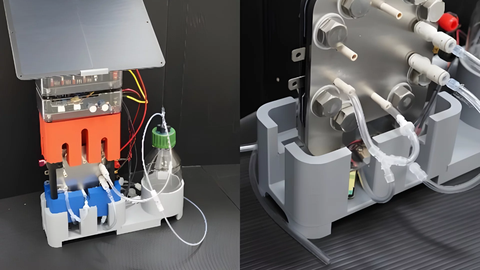
Artificial photosynthesis system developed in Japan to produce fuel
Translated from Estonian, summarized and contextualized by DistantNews.
At a glance
News
Sources not specified
Context piece
- Japanese researchers have developed an artificial photosynthesis system to produce fuel.
- The system uses solar energy to convert carbon dioxide and water into formic acid.
- Unlike typical systems, it operates continuously without battery-based control, using a self-regulating electrolyzer.
Scientists in Japan have made a significant stride in renewable energy by developing an artificial photosynthesis system capable of producing fuel. Researchers at Osaka Metropolitan University have created a system that harnesses solar energy to convert carbon dioxide and water into formic acid.
This innovative system is notable not only for producing formic acid but also for its ability to maintain a steady output throughout the day. This consistent production is achieved without relying on battery-based control hardware, which is commonly used to manage the instability of solar power.
Instead, the system employs a modified electrolyzer that possesses a degree of self-regulation. This design allows it to adapt to fluctuating sunlight conditions, ensuring a continuous and stable generation of formic acid. The development represents a promising advancement in creating sustainable fuel sources through artificial biological processes.
The potential applications for this technology are vast, offering a cleaner alternative to traditional fuel production methods. By mimicking natural photosynthesis, the system contributes to efforts aimed at reducing carbon emissions and combating climate change.
DistantNews Editorial
Originally published by Postimees in Estonian. Translated, summarized, and contextualized by our editorial team with added local perspective. Read our editorial standards.
More Stories
/nginx/o/2026/03/27/17531669t1h5ffc.jpg)

From Our Blog

What Gets Lost (and Found) When News Is Translated

The Critical Role of Diaspora Media in Global News

What Travellers Should Know About Countries with Restricted Press

A Digital Nomad's Guide to Following Local News

How the Same Story Looks Different in Different Countries
