


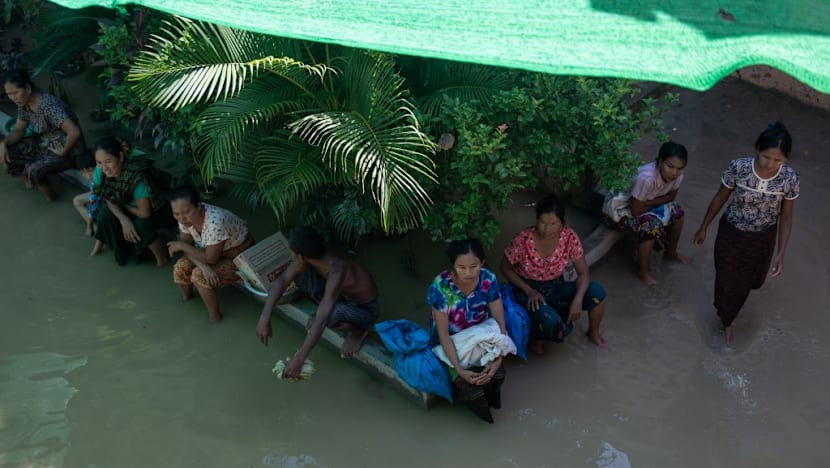
Monsoon floods submerge villages and fields in Myanmar
Translated from English, summarized and contextualized by DistantNews.
At a glance
News
Named sources
Ongoing story
- Severe monsoon flooding has inundated villages and farmland in central Myanmar, displacing thousands.
- Many affected individuals were already displaced by the ongoing civil war following the 2021 military coup.
- The floods have ruined livelihoods, destroyed crops, and exacerbated humanitarian needs for food, health, and water.
Central Myanmar is grappling with severe monsoon flooding that has submerged villages and paddy fields, forcing residents to flee their homes. The deluge has compounded the suffering of those already displaced by the civil war that erupted after the country's 2021 military coup.
The suffering we are facing, I can't even put into words how painful it is.
In Wetlet township, Sagaing region, a 53-year-old villager named Cho Myint described the immense pain of losing everything. Her family was forced to evacuate as floodwaters rose, leaving them with nothing. The United Nations reported that since July, monsoon flooding across Sagaing, Rakhine, Irrawaddy, and Kachin states has impacted an estimated 390,000 people, with Sagaing alone accounting for 230,000.
They couldn't save anything. It is really terrible.
U Sint, another resident of Wetlet, highlighted the dire situation for war refugees living in temporary shelters, which were completely submerged. "They couldn't save anything. It is really terrible," he said. The floods have also devastated livelihoods, with rice seedlings washed away and the land rendered unplantable for the foreseeable future. This destruction makes it impossible to cultivate paddy, a staple crop.
The rice seedlings have already been swept away... In this area, it's simply impossible to plant paddy anymore. Even if we were to sow seeds again, the land hasn't emerged yet.
The Myanmar Ministry of Social Welfare, Relief and Resettlement indicated that by August 11, heavy rainfall and river flooding in Sagaing had forced over 11,400 people from 3,220 households to relocate to flood relief centers. In Wetlet, some residents like Aung Ko remained behind to protect their property, living on upper floors of their homes and relying on instant noodles and bottled water. The UN Office for the Coordination of Humanitarian Affairs (OCHA) warned that with ongoing rainfall and rivers at or above danger levels, the flooding's impact is expected to continue for weeks. The damage to homes, infrastructure, and farmland has worsened humanitarian needs, particularly for essential services like food, healthcare, and safe water.
Before the donors came, we had no choice but to take floodwater and boil it to drink.
DistantNews Editorial
Originally published by CNA in English. Translated, summarized, and contextualized by our editorial team with added local perspective. Read our editorial standards.
More Stories


From Our Blog

What Gets Lost (and Found) When News Is Translated

The Critical Role of Diaspora Media in Global News

What Travellers Should Know About Countries with Restricted Press

A Digital Nomad's Guide to Following Local News

How the Same Story Looks Different in Different Countries
