


Monsoon Rains to Continue in South Korea Through July 9; Typhoon Khanun Looms
Translated from Korean, summarized and contextualized by DistantNews.
At a glance
News
Sources not specified
Ongoing story
- South Korea is expected to experience continued monsoon rains until July 9, with potential for heavy downpours and thunderstorms.
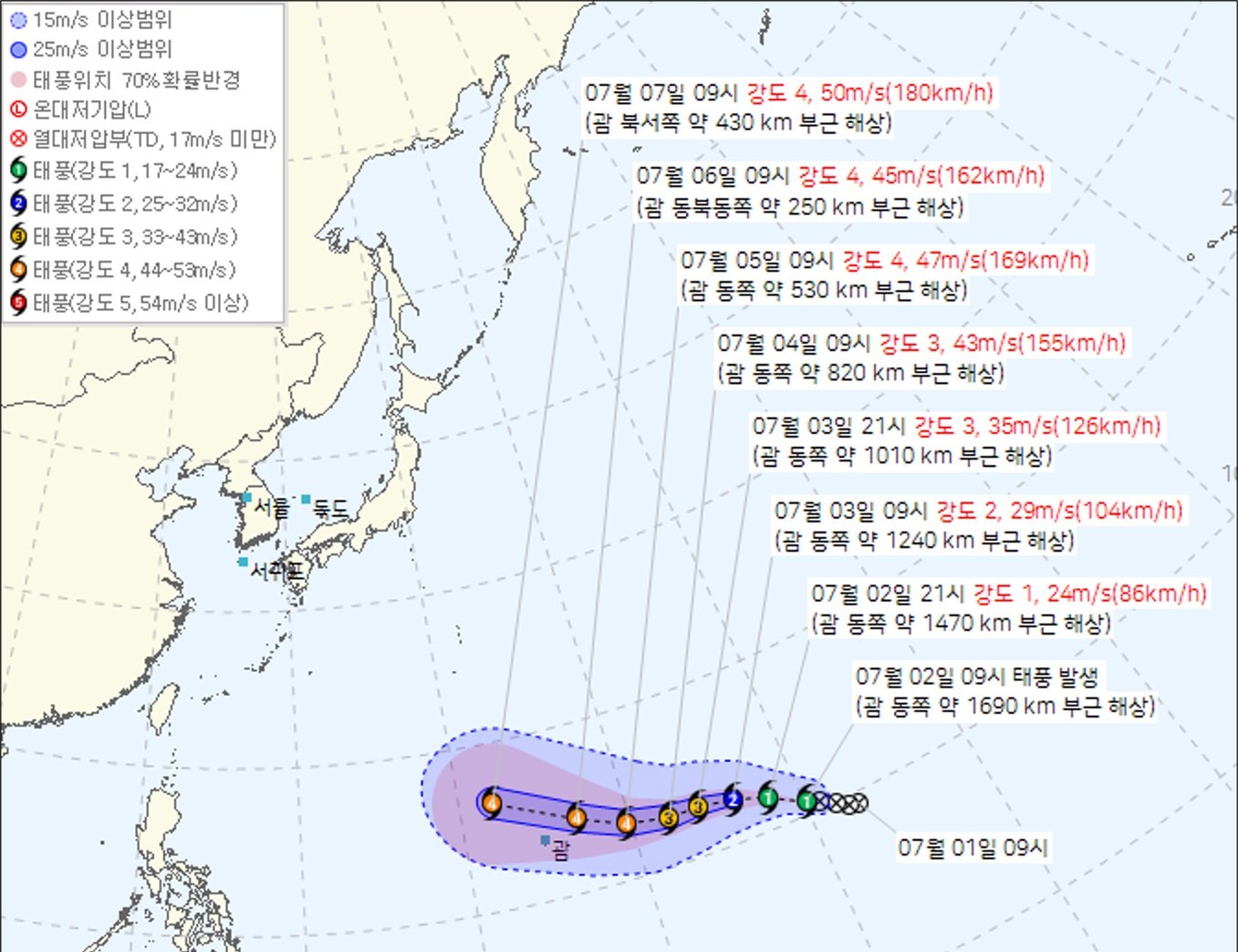
- Typhoon Khanun is approaching the Korean Peninsula, adding uncertainty to the weather forecast.
- Temperatures will remain high and humid, with some relief expected mid-week before potentially increasing again.
South Korea is bracing for continued monsoon rainfall, with forecasts indicating the rainy season will persist until July 9. The Korea Meteorological Administration (KMA) has warned of frequent rain and high humidity across the country, influenced by the positioning of the stationary front and the North Pacific high-pressure system.
From July 2-3, localized downpours are expected in inland areas due to atmospheric instability, with some regions potentially experiencing heavy rainfall accompanied by strong winds and thunder. The southern coast and Jeju Island are particularly vulnerable, with forecasts predicting significant rainfall, especially from July 3-4. The KMA anticipates the stationary front may shift northward again, bringing rain to central regions and the Seoul metropolitan area later in the week.
The stationary front has moved north, and rain has officially begun in earnest in the central region this month.
Adding to the weather uncertainty is Typhoon Khanun, which is currently located east of Guam and moving westward. While its exact trajectory remains variable, the typhoon poses a potential threat and could influence the duration and intensity of the monsoon rains. Meanwhile, daytime temperatures are expected to hover around 30 degrees Celsius (86 degrees Fahrenheit) in inland areas, with high humidity persisting despite a brief dip in temperature mid-week.
There is a possibility of localized heavy rainfall of 20-30 mm per hour during the downpours. Gusts of wind and thunder may accompany the downpours, so caution is advised.
DistantNews Editorial
Originally published by Dong-A Ilbo in Korean. Translated, summarized, and contextualized by our editorial team with added local perspective. Read our editorial standards.
More Stories


From Our Blog

What Gets Lost (and Found) When News Is Translated

The Critical Role of Diaspora Media in Global News

What Travellers Should Know About Countries with Restricted Press

A Digital Nomad's Guide to Following Local News

How the Same Story Looks Different in Different Countries
