

More Germans Want to Join the Bundeswehr. But Shortages Remain Huge.
Translated from Polish, summarized and contextualized by DistantNews.
TLDR
- Germany's Bundeswehr saw a 20% increase in applications for military service in the first quarter of 2026 compared to the previous year.
- Despite the rise in interest, the German army still faces a significant personnel shortage, estimated at around 50,000 soldiers.
- To address recruitment challenges and deployment needs, such as a planned brigade in Lithuania, the Bundeswehr is exploring various options, including mandatory service and increased flexibility in voluntary service.
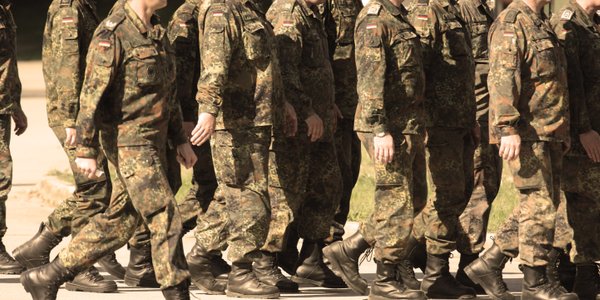
The German armed forces, the Bundeswehr, are experiencing a notable uptick in recruitment interest, with applications rising by 20% in the first quarter of 2026. This positive trend, reported by Rzeczpospolita, suggests a potential shift in public perception towards military service, possibly influenced by ongoing geopolitical tensions and increased visibility of the Bundeswehr through recruitment campaigns.
We assume – but these are only estimates, to be clear – that we will need about 50,000 to 60,000 more soldiers in the standing armed forces than currently.
However, this surge in applications does not erase the substantial personnel deficit the Bundeswehr faces. Defense Minister Pistorius has previously estimated a need for an additional 50,000 to 60,000 soldiers to meet the army's full strength. At the current rate of recruitment and intake, filling these vacancies could take over a decade. This persistent shortage poses a significant challenge, particularly for commitments like stationing a full brigade of approximately 5,000 soldiers in Lithuania by the end of 2027.
To bridge this gap, Germany is considering various strategies. While a return to mandatory conscription is not currently on the table for the coalition government, alternative ideas like a broader national service are being discussed. Furthermore, changes to voluntary service, including increased flexibility in commitment duration and mandatory surveys for 18-year-olds, aim to streamline the recruitment process and better match potential recruits with suitable roles. The article also contrasts Germany's situation with Poland's military strength, noting that Poland has a larger total number of soldiers when including territorial defense and voluntary basic service, highlighting different approaches to national defense.
The coalition government has not agreed on the return to conscription, but there are various ideas for restoring national service, which would not be limited only to the military; other services could also be chosen.
Justyna Gotkowska, deputy head of the Centre for Eastern Studies, notes that the Bundeswehr's image is improving, a stark contrast to a decade ago when soldiers avoided wearing uniforms in public. This improvement is attributed to recruitment efforts and greater public presence. The article implies that while the trend is positive, the scale of the challenge requires sustained and innovative solutions to ensure the Bundeswehr can meet its national and international security obligations.
The image of the Bundeswehr is improving, because there are recruitment campaigns and greater visibility of the Bundeswehr on the streets. But it must be remembered that just 10 years ago, German soldiers avoided wearing uniforms on trains or buses because they had to face unpleasant situations.
DistantNews Editorial
Originally published by Rzeczpospolita in Polish. Translated, summarized, and contextualized by our editorial team with added local perspective. Read our editorial standards.
More Stories
From Our Blog

What Gets Lost (and Found) When News Is Translated

The Critical Role of Diaspora Media in Global News

What Travellers Should Know About Countries with Restricted Press

A Digital Nomad's Guide to Following Local News

How the Same Story Looks Different in Different Countries
