

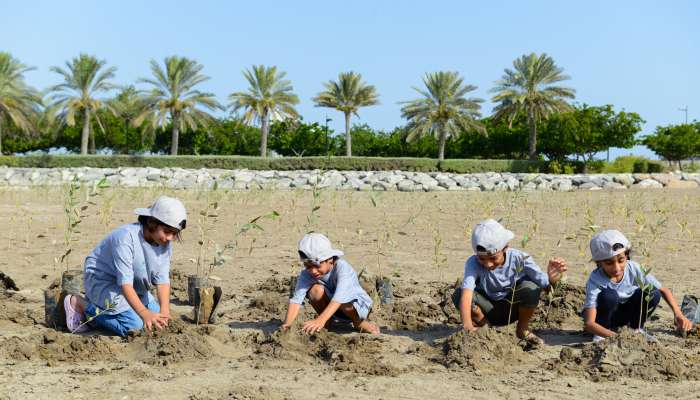
More than 274,000 seedlings of fruit, wild trees distributed
Summarized and contextualized by DistantNews.
At a glance
News
Named sources
Outcome reported
- Oman's "OQ Green Initiative" has distributed over 274,000 fruit and wild tree seedlings since 2021.
- The initiative, a partnership between OQ Group and the Ministry of Agriculture, aims to boost food security and environmental sustainability.
- It is expected to yield over 10,000 tonnes of fruit annually, with an economic return exceeding OMR4.3 million and absorbing 8,000 tonnes of CO2.
Oman's "OQ Green Initiative," launched in 2021, has made significant strides in enhancing food security and environmental sustainability across the Sultanate. Implemented by the OQ Group in collaboration with the Ministry of Agriculture, Fisheries and Water Resources and the Agricultural and Fisheries Development Fund, the initiative has successfully produced and distributed more than 274,000 seedlings of fruit and wild trees.
The initiative represents a successful national model of partnership between the public and private sectors.
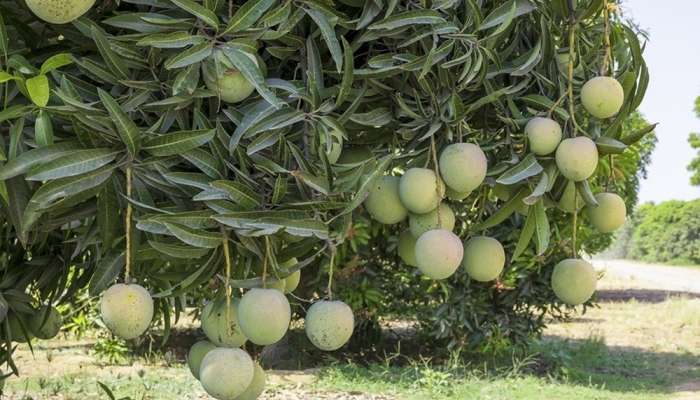
These seedlings have been distributed across various governorates, contributing to the expansion of green areas, increased local production, and the preservation of natural resources. Dr. Ali Ubaid Al Adawi, Director of Agricultural Research in North Al Batinah Governorate, highlighted the initiative's success as a national model for public-private partnerships. He noted the production of high-quality, productive seedlings of various economic varieties, including mango, Omani lemon, fig, and guava, which supports the agricultural sector's development and food security goals.
The initiative has targeted farmers, investors, commercial fields, government institutions, and civil associations. Over 169,000 seedlings went to commercial fields, with more than 16,000 distributed to farmers. This effort aims to expand fruit tree cultivation, boost agricultural output, and increase the sector's economic contribution. Furthermore, it supports scientific research by expanding genetic banks, developing diagnostic tests, and executing studies to improve propagation techniques and seedling quality.
The expected economic return of the initiative exceeds 10,000 tonnes of fruit over the coming years, with a market value of more than OMR4.3 million, in addition to supporting farmers’ income and enhancing self-sufficiency levels.
The projected economic return from the initiative is substantial, exceeding 10,000 tonnes of fruit annually with a market value of over OMR4.3 million. This is in addition to supporting farmers' incomes and enhancing self-sufficiency. Environmentally, the planting of over 274,000 trees is expected to absorb approximately 8,000 tonnes of carbon dioxide gas each year, bolstering vegetation cover, combating desertification, and aiding adaptation to climate change effects. Said Nasser Al Badaai of OQ Group emphasized the initiative's role in the group's social investment strategy and commitment to sustainability through national partnerships.
The environmental impact of the initiative is represented in planting more than 274,000 trees, which are expected to absorb approximately 8,000 tonnes of carbon dioxide gas annually, alongside enhancing vegetation cover, limiting desertification, and supporting adaptation to the effects of climate change.
DistantNews Editorial
Originally published by Times of Oman. Summarized and contextualized by our editorial team with added local perspective. Read our editorial standards.
More Stories

From Our Blog

What Gets Lost (and Found) When News Is Translated

The Critical Role of Diaspora Media in Global News

What Travellers Should Know About Countries with Restricted Press

A Digital Nomad's Guide to Following Local News

How the Same Story Looks Different in Different Countries
