


More Than a Decade of Cooperation: Panama’s Health Ministry and CHAI Renew Malaria Fight
Translated from Spanish and summarized by DistantNews. Read the original for the full story.
At a glance
News
Named sources
New plan
- Panama’s Health Ministry and the Clinton Health Access Initiative renewed a memorandum of understanding to improve malaria surveillance and target prevention and treatment efforts.
- Panama reported 5,298 cumulative malaria cases through epidemiological week 34 of 2026, down from 10,663 in 2024 and 7,758 in 2025.
- Health officials said malaria remains a public-health challenge, particularly in hard-to-reach communities, despite the declining trend.
Panama’s Health Ministry and the Clinton Health Access Initiative have renewed their cooperation against malaria, extending a partnership that has lasted more than a decade. The new memorandum of understanding will focus on improving epidemiological data analysis and directing measures to areas where transmission risks are greatest.
Panama recorded 5,298 cumulative malaria cases through epidemiological week 34 of 2026. The figure is below the 10,663 cases recorded during the same period in 2024 and the 7,758 cases reported in 2025.
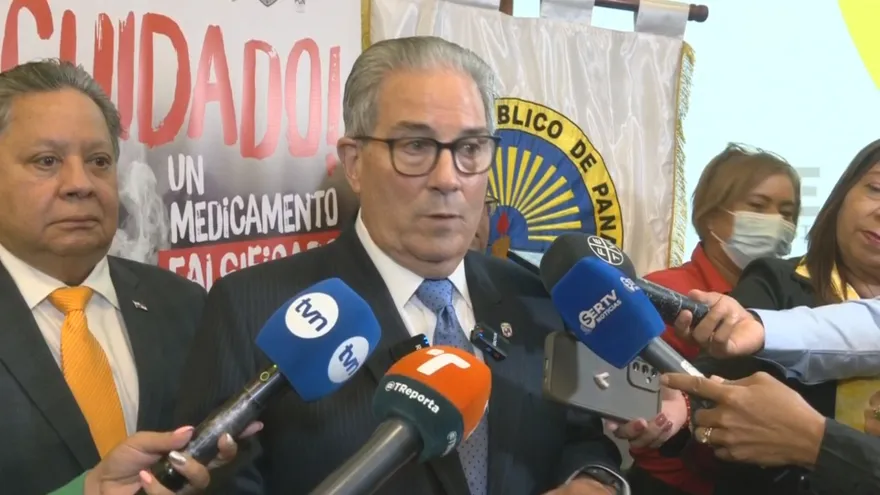
Health Minister Fernando Boyd Galindo welcomed the continued partnership but warned that malaria remains a public-health challenge. Prevention, surveillance, diagnosis and timely treatment must continue, especially in communities that are heavily affected or difficult to reach. “In this challenge, our alliance with CHAI has been fundamental,” he said, citing technical support, innovation and the use of evidence to strengthen the country’s response.
The renewed agreement will support further analysis of epidemiological data so authorities can make decisions and direct resources and interventions toward higher-risk areas. Carlos Echeverría, CHAI’s regional director of operations and legal representative, said Panama was the first country in the region to adopt the initiative aimed at eliminating malaria. He said the new agreement reaffirmed Panama’s commitment to advancing toward that goal.
Panama’s malaria-control department joined the country’s national eradication initiative in 1956. Since then, specialist teams have maintained surveillance, diagnosis and vector-control work, particularly in remote communities. Authorities attribute recent progress to stronger prevention, epidemiological surveillance, diagnosis and timely treatment, and say the renewed alliance will help sustain the decline in cases.
In this challenge, our alliance with CHAI has been fundamental.
About this summary
Originally published by TVN Panamá in Spanish. Translated, summarized, and contextualized automatically by DistantNews, with a note on how the source frames the story. Not individually reviewed before publishing. How this works.
More Stories

From Our Blog

News in Translation: What Gets Lost, and How We Keep the Framing

Diaspora Media: How Communities Abroad Follow Home

Traveling Where the Press Is Not Free: How to Read the News There

The Digital Nomad's Guide to Local News

The Same Story, Different Countries: How Coverage Changes at the Border
