


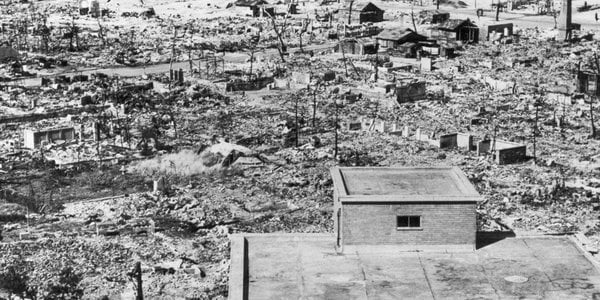
More Than Cities: Hiroshima and Nagasaki Stand as Monuments Shouting a Warning to the World
Translated from Polish, summarized and contextualized by DistantNews.
At a glance
News
Sources not specified
Context piece
- The article commemorates the 78th anniversary of the atomic bombings of Hiroshima and Nagasaki, highlighting their enduring message as warnings to the world.
- It details the events leading up to the bombing of Hiroshima on August 6, 1945, including the modified B-29 bomber 'Enola Gay' and the 'Little Boy' atomic bomb.
- The text emphasizes the catastrophic destruction in Hiroshima, where nearly 90% of the city's infrastructure was destroyed, with over 51,000 of its 76,000 buildings obliterated or burned.
On a sweltering night, August 6, 1945, the airbase at North Field buzzed with activity. Powerful floodlights illuminated the runway where the modified Boeing B-29 strategic bomber, christened 'Enola Gay' by its pilot Colonel Paul Tibbets in honor of his mother, was being prepared for a historic flight.
At 2:45 AM, the 'Enola Gay' lifted off, its silhouette against the illuminated sky indistinguishable from the thousands of other aircraft that had dominated the war-torn skies for years. Few aboard knew the true payload: an atomic bomb innocuously named 'Little Boy,' packing a 15-kiloton yield. To achieve a similar destructive force, 2,500 planes carrying 1,700 tons of incendiary bombs would have been required for Hiroshima.
The atomic bomb detonated on August 6, 1945, devastated Hiroshima. Nearly 90% of the city's infrastructure was destroyed. Of the approximately 76,000 buildings, over 51,000 were completely destroyed or burned, with an additional 6,000 partially collapsing. The cities of Hiroshima and Nagasaki stand as monuments, their existence a stark, global warning.
DistantNews Editorial
Originally published by Rzeczpospolita in Polish. Translated, summarized, and contextualized by our editorial team with added local perspective. Read our editorial standards.
More Stories


From Our Blog

What Gets Lost (and Found) When News Is Translated

The Critical Role of Diaspora Media in Global News

What Travellers Should Know About Countries with Restricted Press

A Digital Nomad's Guide to Following Local News

How the Same Story Looks Different in Different Countries
