

More than one in three people in Saxony-Anhalt lacks good public transport access
Translated from German and summarized by DistantNews. Read the original for the full story.
At a glance
Newswire
From a news agency
Context piece
- About 37% of Saxony-Anhalt’s population, or roughly 784,000 people, lacks a nearby bus or train stop with service frequent enough to meet the study’s basic standard.
- The gap is widest in rural areas, with nearly 63% of residents in Wittenberg district lacking good basic public transport access.
- Halle and Magdeburg have the strongest connections among the state’s larger cities, while the study measured scheduled service rather than punctuality, cancellations or travel times.
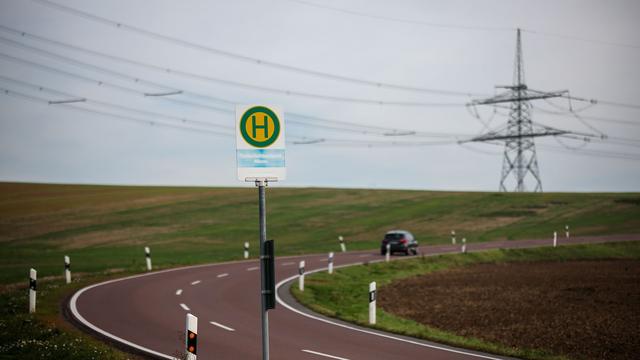
Public transport access in Saxony-Anhalt varies sharply by location. About 37% of the state’s residents, or roughly 784,000 people, do not have a nearby stop with frequent enough bus or train service to meet a basic standard in a new ÖV Atlas study.
The study defines a good basic service as a stop about 250 meters away where a bus runs every 30 minutes on weekdays. Around 190,000 people, or about 9% of the population, do not even reach the study’s lowest service category.
Halle has the strongest access, with about 85% of residents receiving a good or very good service. The figure is about 75% in Magdeburg and just over 41% in Dessau-Roßlau. Across the state, however, only about 27% of residents fall into the good or very good categories. Halberstadt ranks next among larger cities, followed by Merseburg, Dessau-Roßlau and Wernigerode.
The weakest result comes from Wittenberg district, where nearly 63% of residents lack a good basic service. Almost one in four cannot reach a scheduled service running at least every two hours within a reasonable distance. More than half of residents also lack good basic access in the Börde, Jerichower Land and Mansfeld-Südharz districts. Harz and Saalekreis perform better, but each still has a rate of about 39% without good access.
The atlas assessed distance to the nearest stop, service frequency and the type of transport. Rail connections received a higher rating than tram or bus stops. It used scheduled timetable data from late January 2026 and 2022 census population figures. Punctuality, cancellations and travel times were not included, and demand-responsive buses were excluded because comparable data were insufficient.
About this summary
Originally published by Die Zeit in German. Translated, summarized, and contextualized automatically by DistantNews, with a note on how the source frames the story. Not individually reviewed before publishing. How this works.
More Stories
From Our Blog

What Gets Lost (and Found) When News Is Translated

How the Same Story Looks Different in Different Countries

The Critical Role of Diaspora Media in Global News

What Travellers Should Know About Countries with Restricted Press

A Digital Nomad's Guide to Following Local News
