


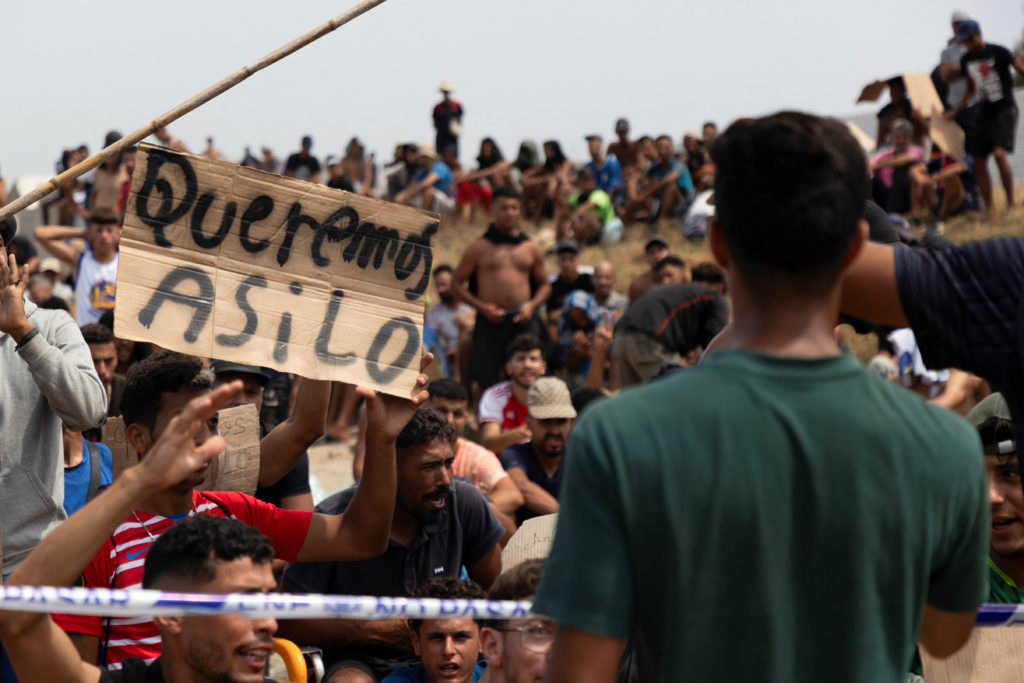
Moroccan security forces arrest nearly 300 migrants trying to reach Spain's Ceuta
Summarized and contextualized by DistantNews.
At a glance
News
Official statement
Context piece
- Moroccan security forces arrested 294 migrants attempting to reach the Spanish exclave of Ceuta.
- Authorities also detained 61 Moroccans suspected of facilitating the illegal crossings.
- The arrests followed a surge in social media calls for a mass crossing into Ceuta, prompting increased security measures.
Moroccan security forces apprehended 294 migrants from sub-Saharan Africa on Saturday as they attempted to enter the Spanish exclave of Ceuta. The state-run broadcaster Medi 1 TV reported that authorities also arrested 61 Moroccans accused of aiding these migration attempts. This action comes amid heightened security along the border, following a recent increase in social media activity encouraging a mass crossing into Ceuta.
The recent surge in attempted crossings follows a larger incident two weeks prior, where tens of thousands of migrants rushed toward Ceuta. That event resulted in one of the region's deadliest migration crises, with official figures reporting at least 90 deaths on both sides of the border, though human rights groups suggest higher numbers. Moroccan and Spanish authorities have since bolstered their security presence and restricted movement toward the area to prevent further mass attempts.
Thousands of migrants from various African nations travel to Morocco annually, fleeing conflict, poverty, and instability in search of routes into Europe. Many aim for Ceuta or the nearby Spanish exclave of Melilla, hoping to eventually reach mainland Spain for better economic prospects. The Moroccan interior ministry did not respond to inquiries regarding the latest arrests or the specific number of security personnel deployed along the border. However, a senior Moroccan diplomat previously stated that over 20,000 security personnel are stationed daily along the border with Ceuta, incurring substantial costs.
DistantNews Editorial
Originally published by PBS NewsHour. Summarized and contextualized by our editorial team with added local perspective. Read our editorial standards.
More Stories


From Our Blog

How the Same Story Looks Different in Different Countries

What Gets Lost (and Found) When News Is Translated

The Critical Role of Diaspora Media in Global News

What Travellers Should Know About Countries with Restricted Press

A Digital Nomad's Guide to Following Local News
