

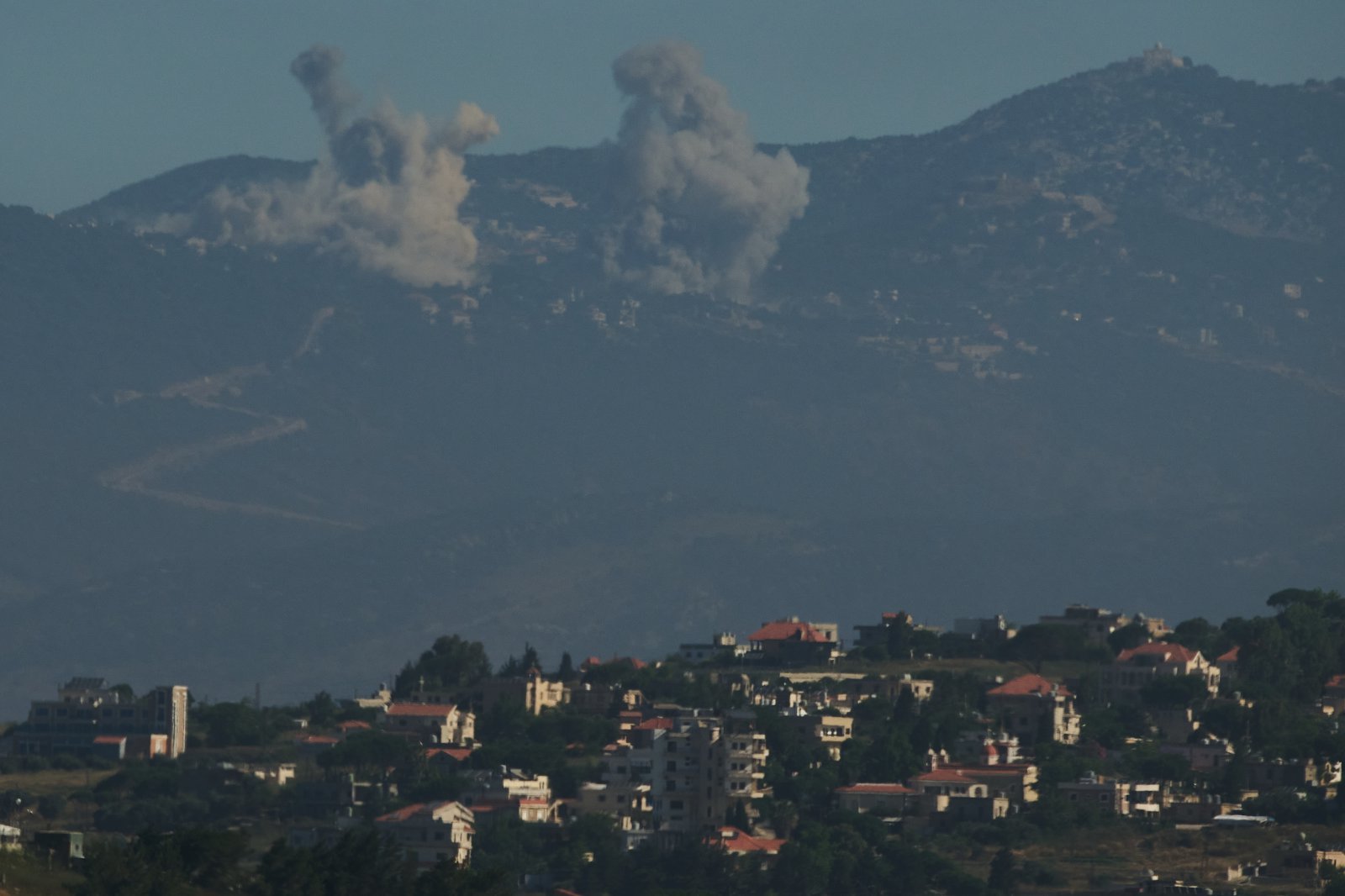

Moscow refinery explosion caused by air defense missile, not Ukrainian drone: NYT
Translated from Korean, summarized and contextualized by DistantNews.
At a glance
News
Named sources
Ongoing story
- A Moscow fuel storage facility, initially reported to have exploded due to a Ukrainian drone attack, may have actually been hit by a Russian air defense missile, according to The New York Times.
- The incident, possibly a case of friendly fire, highlights the strain on Russian air defenses from Ukraine's expanding attacks on Moscow.
- Videos suggest a MANPADS missile was fired to intercept Ukrainian drones, with one missile appearing to hit a fuel silo, causing an explosion.
A fuel storage facility near Moscow reportedly exploded not from a large-scale Ukrainian drone attack as initially suggested, but potentially from a Russian air defense missile, The New York Times reported on June 19. The incident, occurring on June 18, involved a facility located southeast of Moscow, where the roof of a storage silo was seen flying into the air and then falling back down.
This event, possibly a result of Russian forces misfiring, underscores the significant pressure Ukraine's increased attacks on Moscow are placing on Russia's air defense systems. Footage shared on Chinese social media platform Douyin shows what appear to be two air defense missiles launched from the ground to intercept Ukrainian unmanned aerial vehicles near the Kapotnya oil refinery. One missile is seen flying low towards a fuel silo just before the explosion.
The possibility that this was friendly fire by Russian forces highlights the strain that Ukraine's expanding attacks on Moscow are placing on Russia's air defense systems.
Security experts analyzing the footage suggest the missile was likely a MANPADS, or Man-Portable Air-Defense System. Michael Clarke, a British security specialist, noted that the absence of smoke in the initial missile flight, its low trajectory, and a thin contrail point to a MANPADS launch. Other social media videos have captured Russian soldiers firing MANPADS to shoot down Ukrainian drones.
Russia's primary air defense systems are costly and designed mainly to intercept aircraft and missiles, not the high volume of drones Ukraine is now deploying. While Russia deployed vehicle-mounted Pantsir missile systems on June 19, capable of intercepting drones, they struggle to cope with large-scale drone assaults. Ukraine has recently ramped up production of long-range drones and increased its large-scale attacks targeting Russia.
Based on the lack of smoke in the initial phase of the missile's flight, its low trajectory, and the thin contrail, it is highly likely to be a MANPADS launch.
DistantNews Editorial
Originally published by Dong-A Ilbo in Korean. Translated, summarized, and contextualized by our editorial team with added local perspective. Read our editorial standards.
More Stories



From Our Blog

What Gets Lost (and Found) When News Is Translated

The Critical Role of Diaspora Media in Global News

What Travellers Should Know About Countries with Restricted Press

A Digital Nomad's Guide to Following Local News

How the Same Story Looks Different in Different Countries
