


Mount Sinabung eruption blankets two districts in volcanic ash
Translated from Indonesian and summarized by DistantNews. Read the original for the full story.
At a glance
News
Named sources
Ongoing story
- Mount Sinabung in North Sumatra erupted with an ash column rising 3,500 meters above the summit.
- Winds carried dense ash toward Berastagi and Kabanjahe, while further eruptions continued at about 500 meters above the summit.
- Authorities raised the volcano’s status from Level II, Alert, to Level III, Standby, and warned people about volcanic and lahar hazards.
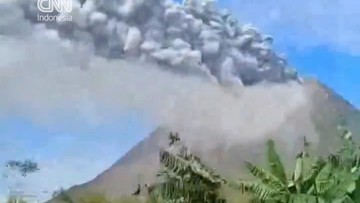
Mount Sinabung in Indonesia’s North Sumatra province erupted with an ash column reaching 3,500 meters above the summit, blanketing parts of two districts.
Armen Putra, head of the volcano’s monitoring post, said winds carried the ash east and southeast toward Berastagi and Kabanjahe. After the initial eruption, the volcano continued erupting, producing ash columns of about 500 meters above the summit.
Authorities urged residents, visitors and tourists to avoid relocated villages and areas within three kilometers of the summit. The restricted sector extends six kilometers to the south and southeast.
The initial ash column reached 3,500 meters. It was followed by continuous eruptions that are still ongoing. The ash column is currently about 500 meters high.
People living near rivers originating on Mount Sinabung were also warned to remain alert for lahar flows. The Karo local government was urged to coordinate with the Center for Volcanology and Geological Hazard Mitigation and the Sinabung monitoring post.
The center raised Sinabung’s status from Level II, Alert, to Level III, Standby. The volcano last erupted in 2022.
Ash has been carried as far as Berastagi, then to Kabanjahe. It may travel even farther.
About this summary
Originally published by CNN Indonesia in Indonesian. Translated, summarized, and contextualized automatically by DistantNews, with a note on how the source frames the story. Not individually reviewed before publishing. How this works.
More Stories


From Our Blog

What Gets Lost (and Found) When News Is Translated

The Critical Role of Diaspora Media in Global News

What Travellers Should Know About Countries with Restricted Press

A Digital Nomad's Guide to Following Local News

How the Same Story Looks Different in Different Countries
