

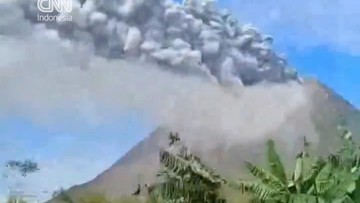

Mount Sinabung Erupts, Volcanic Ash Covers Berastagi
Translated from Indonesian and summarized by DistantNews. Read the original for the full story.
At a glance
Newswire
From a news agency
Ongoing story
- Mount Sinabung erupted on Aug. 31, sending an ash column about 3,500 meters above the summit over Karo regency in North Sumatra.
- Ash covered roads and vehicles in Berastagi, reducing air quality and visibility in some areas.
- Schools and residents were urged to wear masks, follow official guidance and stay away from designated danger zones, while Indonesian military personnel distributed masks.
Volcanic ash from Mount Sinabung covered parts of Berastagi in Indonesia’s North Sumatra province after the volcano erupted at about 10:17 a.m. local time on Aug. 31.
The ash column rose around 3,500 meters above the summit. Ash settled on several roads and vehicle surfaces in Berastagi, lowering air quality and limiting visibility in some places while the ashfall continued.
Education officials urged students, teachers and other school staff from early childhood programs through high school and vocational schools to wear masks outdoors. Zulkarnain Barus, head of the regional education office in Karo, said the safety and health of students and educators were the priority as volcanic activity increased. Schools were also told to monitor updates, follow authorities’ instructions and maintain cleanliness.
Residents in affected areas received similar advice to remain alert and use masks, especially outside. Officials told people to follow instructions from emergency personnel and avoid areas designated as dangerous. Indonesian military personnel also went into the streets to distribute free masks to drivers and pedestrians passing through affected areas.
Because Mount Sinabung has erupted again and released volcanic ash, we urge everyone in affected schools, from early childhood education through high school and vocational schools, to always wear masks when outdoors.
About this summary
Originally published by Republika in Indonesian. Translated, summarized, and contextualized automatically by DistantNews, with a note on how the source frames the story. Not individually reviewed before publishing. How this works.
More Stories


From Our Blog

What Gets Lost (and Found) When News Is Translated

The Critical Role of Diaspora Media in Global News

What Travellers Should Know About Countries with Restricted Press

A Digital Nomad's Guide to Following Local News

How the Same Story Looks Different in Different Countries
