


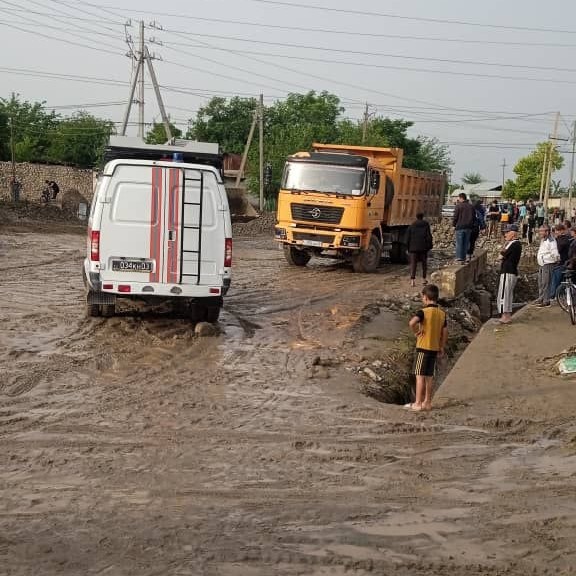
Mudflows have once again caused damage to the residents of Kulob, Panjakent, and several districts of Tajikistan
Summarized and contextualized by DistantNews.
At a glance
News
Named sources
Context piece
- Heavy rains in Tajikistan from May 19-20 triggered mudslides in several cities and districts, causing material damage to residents.
- Affected areas include Kulob and Panjakent cities, as well as Panj, Yovon, and Asht districts, with ongoing efforts to clear debris and restore infrastructure.
- The Emergencies Committee, along with soldiers, officers, and local populations, are actively involved in the cleanup and damage assessment operations.
Tajikistan is once again grappling with the destructive force of nature as heavy rains have unleashed devastating mudslides across several regions. Cities like Kulob and Panjakent, along with districts such as Panj, Yovon, and Asht, have borne the brunt of these natural disasters, which occurred between May 19th and 20th. The immediate aftermath has seen significant material damage to residents' homes and properties, underscoring the vulnerability of communities in these areas to seasonal weather patterns.
Residents of the cities of Kulob (Khatlon province) and Panjakent (Sughd province), as well as Panj and Yovon districts in Khatlon and Asht district in Sughd were most affected by the precipitation.
Our emergency services, including the Emergencies Committee, military personnel, and dedicated local residents, are working tirelessly on the ground. Their efforts are focused on clearing the mud and debris that have inundated homes, roads, and vital infrastructure. In the Panj district's Vahdatobod village, for instance, residents and civil defense services managed to clear 28 houses and yards, pumping water from six more. Similar restoration work is underway in Yovon district, where 200 meters of canal, 300 meters of roads, and four residential houses have been cleared.
Currently in all the affected regions, with the help of special equipment, soldiers and officers of the Committee, as well as the local population, work is being carried out to clear and eliminate the consequences of the disaster.
The scale of the damage is still being fully assessed, but initial reports indicate widespread disruption. In Asht district, mudslides destroyed roads, toppled electric poles, damaged a bridge, and flooded basements. The recurring nature of these mudslides, particularly during the spring rainy season, poses a persistent challenge to Tajikistan. While international news may report on the event, it often fails to capture the deep-seated vulnerability and the sheer resilience required by our communities to cope with these recurring disasters year after year.
In Yovon distirct, the mudslide caused damage to the residents of the villages of Pakhtakor in the Sitorai Surkh jamoat (rural municipality) and Obi Mukiy village in the Obshoron jamoat. With the efforts of residents and the Emergencies Committee employees, 200 meters of the canal, 300 meters of roads, and 4 residential houses were cleared, and restoration work continues.
From a Tajik perspective, these mudslides are not just isolated incidents but a stark reminder of our ongoing struggle with environmental challenges. The efforts to rebuild and recover are a testament to the strong community spirit and the dedication of our emergency responders. However, the long-term implications, including the need for better preventative infrastructure and disaster preparedness, remain a critical concern for the nation's development and the safety of its citizens.
The mudslide in Sughd’s Asht district on the same day caused damage to the mahallas of Tagi Sang, Dosti, Jarqishloq, and Tolonak in the Punuk jamoat. The mudslide partially or completely destroyed roads between the mahallas, knocked down 3-4 electric poles, damaged a bridge, and flooded the basements of 5 houses with mud.
DistantNews Editorial
Originally published by Asia-Plus. Summarized and contextualized by our editorial team with added local perspective. Read our editorial standards.
More Stories


From Our Blog

What Gets Lost (and Found) When News Is Translated

The Critical Role of Diaspora Media in Global News

What Travellers Should Know About Countries with Restricted Press

A Digital Nomad's Guide to Following Local News

How the Same Story Looks Different in Different Countries
