


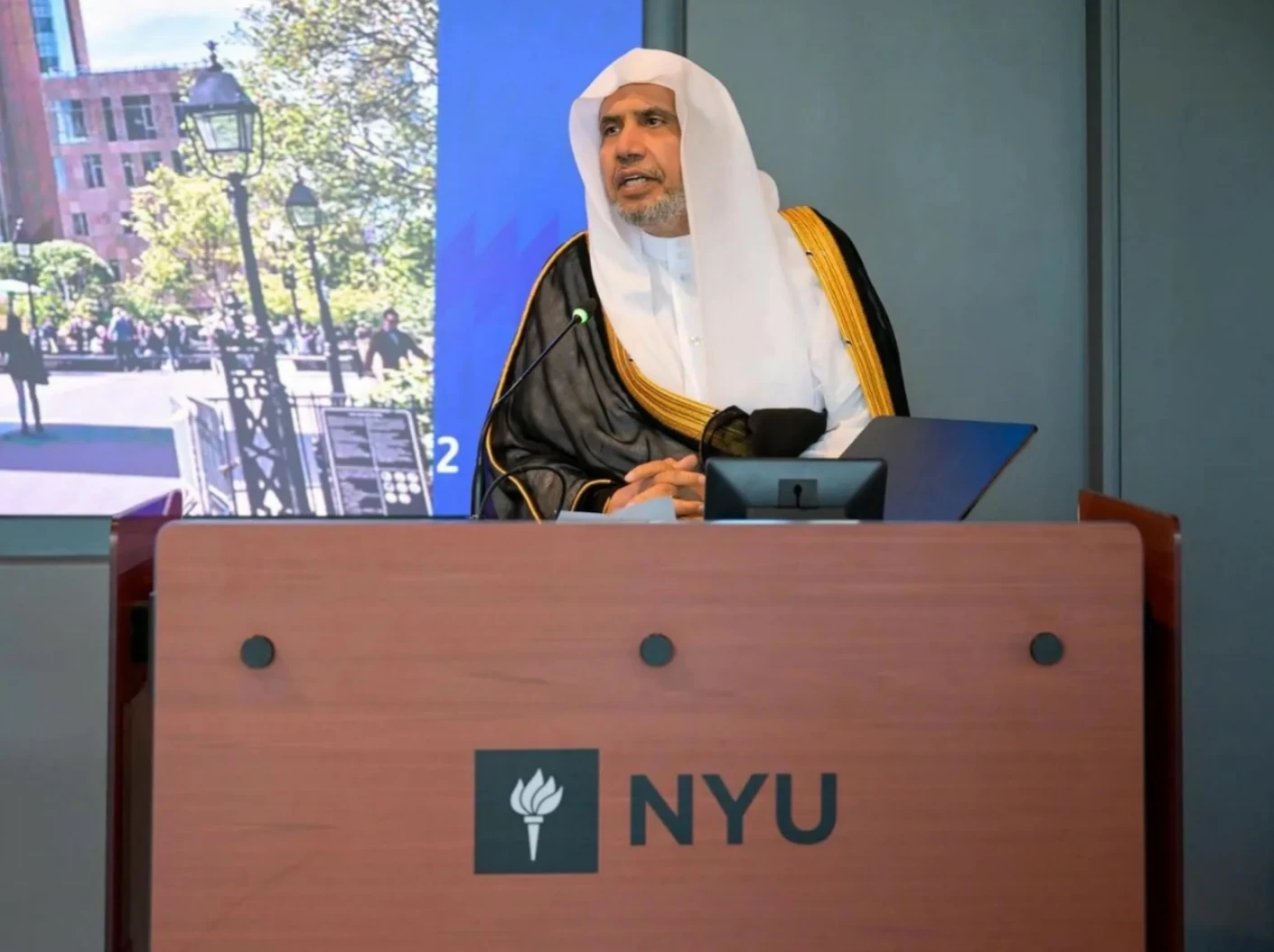
Muslim World League Chief Lectures at NYU on AI's Role in Amplifying Hate Speech
Translated from Arabic and summarized by DistantNews. Read the original for the full story.
At a glance
News
Named sources
Context piece
- The Secretary-General of the Muslim World League, Dr. Muhammad bin Abdulkarim Al-Issa, lectured at New York University on AI's role in hate speech.
- The discussion focused on combating hate speech through social media platforms and the role of religious institutions.
- Al-Issa addressed challenges like AI-generated discriminatory content, algorithmic targeting, and deepfake technology.
In a significant academic forum at New York University, the Secretary-General of the Muslim World League, Sheikh Dr. Muhammad bin Abdulkarim Al-Issa, delivered a comprehensive lecture and engaged in a dialogue with academics and invited guests. The event centered on a critical contemporary issue: the utilization of artificial intelligence in amplifying hate speech across social media platforms. Dr. Al-Issa's address underscored the vital role of religious institutions and community organizations in countering such harmful narratives, delving into the root causes and potential remedies for online extremism.
The lecture provided an in-depth analysis of the multifaceted challenges posed by AI in the digital age. Dr. Al-Issa highlighted how AI technologies can be employed to automatically generate discriminatory or inciting content, including text, images, and videos. He also discussed the sophisticated methods of algorithmic targeting, where user behavior and interests are analyzed to deliver divisive content, thereby increasing engagement. Furthermore, the discussion touched upon the amplification of hate speech through automated networks (bots) and coordinated campaigns, as well as the manipulation of audio-visual content using deepfake technology, which can be weaponized to defame individuals or groups.
From the perspective of the Muslim World League and its leadership, this engagement at a prestigious American university is crucial. It represents an effort to bridge understanding between different cultural and religious perspectives on a global issue. The League's focus on combating hate speech aligns with its broader mission to promote peace, understanding, and moderate discourse. The dialogue at NYU is particularly noteworthy as it addresses the complex interplay between freedom of expression and the need to protect society from harmful content, a balance that requires careful legal and ethical consideration.
Dr. Al-Issa's commentary on the legal implications of AI-driven hate speech is particularly pertinent. He emphasized the need for precise legal analysis to strike a balance between safeguarding legitimate freedom of expression and shielding society from incitement. Determining the legal responsibility of digital actors and platforms is a complex challenge that requires ongoing international dialogue and cooperation. This lecture at NYU serves as a vital platform for initiating such discussions, aiming to foster a global consensus on ethical AI use and the mitigation of its potential harms, a perspective that resonates deeply within the Islamic world's commitment to justice and social harmony.
The employment of artificial intelligence in promoting hate speech raises a precise legal analysis, which is to achieve a balance between ensuring freedom of expression within its legitimate scope, and protecting society from inciting content, while determining the legal responsibility of digital actors and technology platforms.
About this summary
Originally published by Okaz in Arabic. Translated, summarized, and contextualized automatically by DistantNews, with a note on how the source frames the story. Not individually reviewed before publishing. How this works.
More Stories



From Our Blog

What Gets Lost (and Found) When News Is Translated

The Critical Role of Diaspora Media in Global News

What Travellers Should Know About Countries with Restricted Press

A Digital Nomad's Guide to Following Local News

How the Same Story Looks Different in Different Countries
