


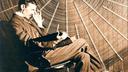
Mystery of the Genius from Smiljan: Agents Searched Tesla's Chest for 'Death Ray' Formula
Translated from Croatian, summarized and contextualized by DistantNews.
At a glance
In-depth
Sources not specified
Context piece
- Nikola Tesla, the renowned inventor, studied at the Karlovac Gymnasium in Croatia, where his interest in physics and electricity was sparked by a teacher.
- Despite early academic struggles in math and drawing, Tesla pursued technical studies, driven by his mother's encouragement and a promise to his father after recovering from cholera.
- Tesla's groundbreaking inventions, including the alternating current system, laid the foundation for modern technologies like mobile phones and radio, though he often clashed with financiers and Edison over business versus scientific pursuits.
Nikola Tesla's formative years in Karlovac, Croatia, laid the groundwork for his future as a world-changing inventor. He attended the Karlovac Gymnasium, where a physics teacher ignited his passion for electricity. This early exposure to scientific phenomena profoundly impacted the young Tesla, fueling his lifelong dedication to research and experimentation.
Despite a challenging academic start, including a failing grade in mathematics, Tesla's fascination with technology and physics persisted. His father, a priest, initially wanted him to enter the clergy, but a severe bout of cholera led to a promise: if Tesla recovered, he could study engineering. This pivotal moment set him on a path toward innovation.
I cannot express even approximately my excitement as I witnessed his experiments with mysterious phenomena. Every impression produced thousands of echoes in my brain. I wanted to learn more about this extraordinary power; I craved experiment, research...
Tesla's journey continued through technical studies in Graz and Prague. He worked in the telephone industry, making improvements that eventually led him to Edison's company in Paris. However, Tesla grew disillusioned with Edison, viewing him as a businessman rather than a true scientist. He famously refused to share the 1912 Nobel Prize with Edison, highlighting his commitment to pure scientific discovery over commercial accolades.
Tesla considered himself a discoverer of natural phenomena rather than an inventor, dedicating himself to future advancements. His work, though revolutionary, often led to financial struggles due to failed experiments or a lack of understanding from wealthy financiers. His vision extended beyond immediate commercial viability, a trait that set him apart from his contemporaries and ultimately shaped his legacy.
I am not an inventor but a discoverer of things that exist in nature around us.
DistantNews Editorial
Originally published by Večernji List in Croatian. Translated, summarized, and contextualized by our editorial team with added local perspective. Read our editorial standards.
More Stories



From Our Blog

What Gets Lost (and Found) When News Is Translated

The Critical Role of Diaspora Media in Global News

What Travellers Should Know About Countries with Restricted Press

A Digital Nomad's Guide to Following Local News

How the Same Story Looks Different in Different Countries
