


Mystery Surrounds NASA's Mars Probe That Lost Contact Without Explanation
Translated from Spanish, summarized and contextualized by DistantNews.
At a glance
News
Named sources
Outcome reported
- NASA has declared its Mars Atmosphere and Volatile Evolution (MAVEN) probe out of service after losing contact on December 6, 2025.
- An internal investigation suggests a rotational anomaly caused battery depletion, rendering the spacecraft unrecoverable.
- MAVEN, operational since 2014, provided crucial data on Mars' atmospheric loss, including evidence of "sputtering."
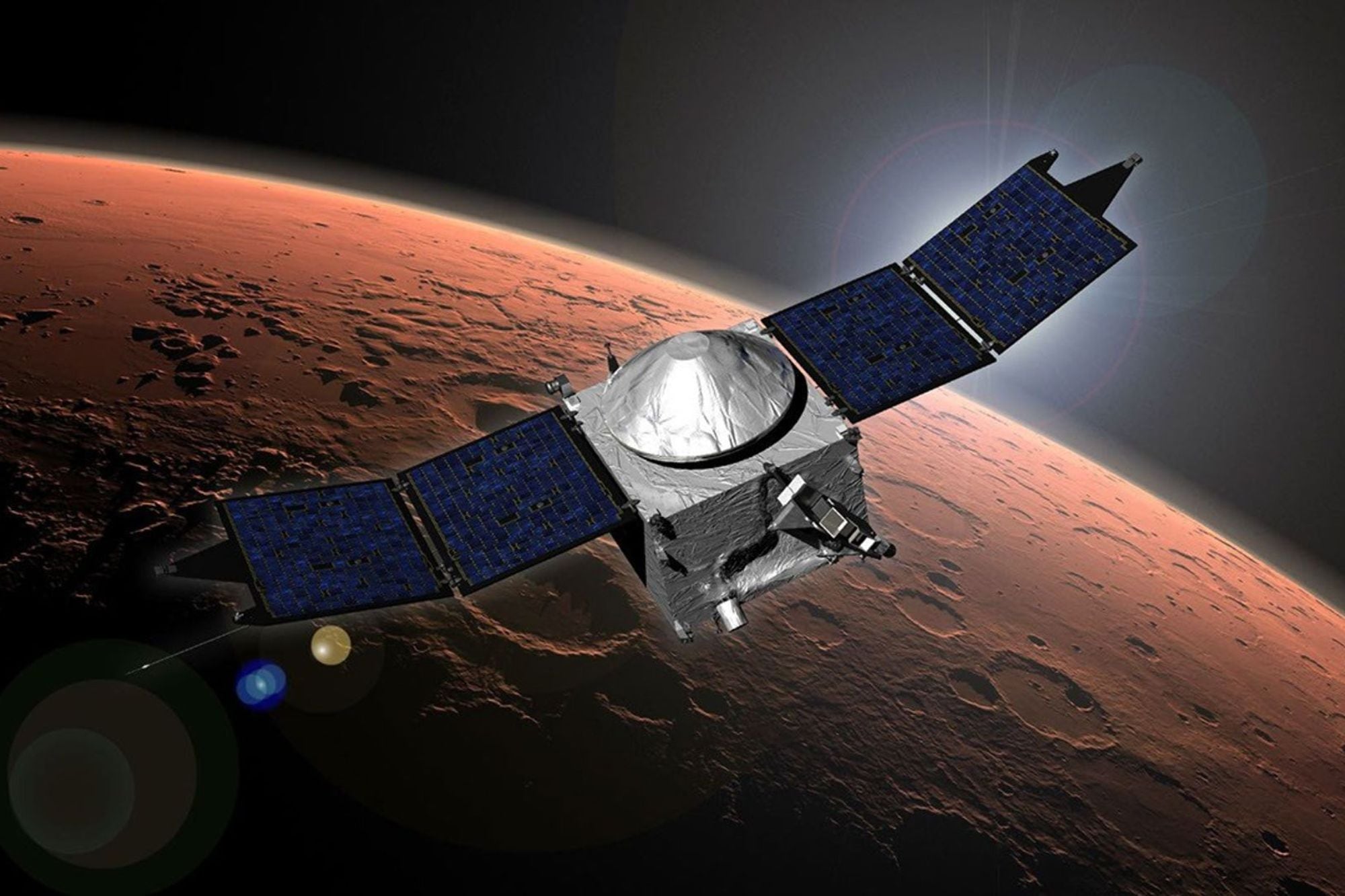
NASA has officially retired the Mars Atmosphere and Volatile Evolution (MAVEN) spacecraft, concluding a mission that provided unparalleled insights into the Red Planet's atmospheric changes. Contact with the probe was lost on December 6, 2025, after it passed behind Mars during a routine orbit. The Deep Space Network, responsible for interplanetary communications, failed to re-establish a signal.
The review board concluded that, due to this rotation, the spacecraft's batteries were depleted, causing the communications system to lose power and leaving MAVEN in an unrecoverable state.
Preliminary findings from an internal investigation point to an anomaly in the spacecraft's rotation speed as the likely cause of the communication blackout. This rapid rotation is believed to have rapidly depleted MAVEN's batteries, leading to a complete loss of power for its communication system. The agency has concluded that the spacecraft is in an unrecoverable state.
Shannon Curry, the mission's principal investigator, described MAVEN as "the best observer of atmospheric escape anywhere in the solar system." She noted that many team members experienced the mission's end as "the loss of a loved one." MAVEN arrived in Mars orbit on September 21, 2014, with the primary objective of studying the planet's atmosphere and understanding its evolution over billions of years.
Maven has been the best observer of atmospheric escape anywhere in the solar system.
During its 11 years of operation, MAVEN completed approximately 6.6 orbits around Mars per Earth day, delivering data that led to significant discoveries. Among its most notable contributions was providing the first direct evidence of "atmospheric sputtering," a process where the solar wind strips away atmospheric particles into space. This phenomenon is key to understanding why Mars lost the majority of its atmosphere and water over eons.
Many members of the team experienced the end of the mission as the loss of a loved one.
DistantNews Editorial
Originally published by La Nación in Spanish. Translated, summarized, and contextualized by our editorial team with added local perspective. Read our editorial standards.
More Stories


From Our Blog

What Gets Lost (and Found) When News Is Translated

The Critical Role of Diaspora Media in Global News

What Travellers Should Know About Countries with Restricted Press

A Digital Nomad's Guide to Following Local News

How the Same Story Looks Different in Different Countries
