

NASA Confirms SpaceX Rocket Stage Impacted Moon; No Risks Identified
Translated from Spanish, summarized and contextualized by DistantNews.
At a glance
News
Named sources
Outcome reported
- NASA confirmed that a SpaceX rocket upper stage impacted the Moon on Wednesday, an event described as safe and without risk.
- The stage was part of a 2025 launch for Firefly Aerospace's Blue Ghost One lunar lander, with its trajectory altered by solar activity and gravity.
- Scientists view the impact as a natural experiment to better understand crater formation and tracking capabilities.
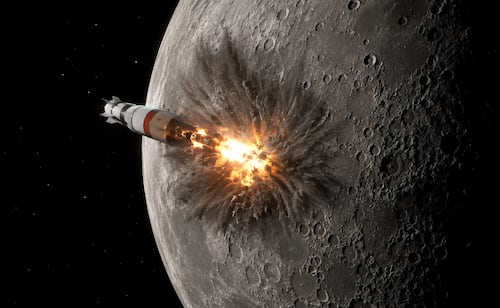
NASA has confirmed the unplanned impact of a SpaceX rocket upper stage against the lunar surface, an event that occurred early Wednesday. The U.S. space agency characterized the incident as safe, posing no risk to Earth or ongoing lunar missions.
NASA did not deliberately plan for this upper stage to impact the Moon.
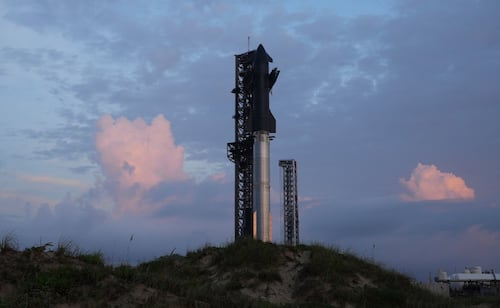
The upper stage originated from a 2025 launch intended to deploy Firefly Aerospace's Blue Ghost One lunar lander. This mission was part of NASA's Commercial Lunar Payload Services (CLPS) initiative, which facilitates the transport of scientific and technological payloads to the Moon. NASA explained that the rocket stage's altered trajectory resulted from a combination of solar activity and gravitational forces.
This is actually a technically accepted and safe method for disposing of equipment in low lunar orbit.
A NASA spokesperson clarified in a video statement that the impact was not deliberately planned. However, she noted that such disposal of hardware is an accepted practice in lunar operations. "This is actually a technically accepted and safe method for disposing of equipment in low lunar orbit," she stated. Mission operators sometimes choose to end operations by impacting equipment on the Moon's surface as a predictable and trackable strategy for end-of-life hardware disposal.
Scientists are eager to study this impact event, as it can help us better understand how to track things like this in the future.
NASA emphasized that the impact poses no danger to anyone on Earth or any equipment on the Moon. Scientists are reportedly eager to study the event, viewing it as an opportunity to enhance their understanding of tracking such objects in the future. The Moon, lacking an atmosphere and possessing a stable surface over long periods, serves as a natural laboratory for studying processes relevant to the entire solar system. Analyzing this impact will help scientists better comprehend crater formation processes and the types of craters resulting from impacts of specific sizes and velocities.
By impacting an object of known size at a known velocity against the lunar surface, this can help scientists understand the process of impact crater formation and what type of crater results from an impact of that size.
DistantNews Editorial
Originally published by El Universal in Spanish. Translated, summarized, and contextualized by our editorial team with added local perspective. Read our editorial standards.
More Stories



From Our Blog

What Press Freedom Means for the News You Read

What Gets Lost (and Found) When News Is Translated

The Critical Role of Diaspora Media in Global News

What Travellers Should Know About Countries with Restricted Press

A Digital Nomad's Guide to Following Local News
