


NASA ends Mars probe mission after six months of silence
Translated from English, summarized and contextualized by DistantNews.
At a glance
News
From a news agency
Outcome reported
- NASA has ended its Mars Atmosphere and Volatile Evolution (MAVEN) mission after the spacecraft went silent for six months.
- The MAVEN probe, launched in 2014, operated for over a decade, far exceeding its original one-to-two-year lifespan.
- Scientists gained significant understanding of atmospheric escape on Mars, crucial for studying rocky planet atmospheres, and the probe also served as a communications relay.
NASA has officially concluded its Mars Atmosphere and Volatile Evolution (MAVEN) mission after its scientific spacecraft lost contact with Earth for six months. The MAVEN probe, which entered Martian orbit in 2014, was designed for an initial mission of one to two years but remained operational for over a decade.
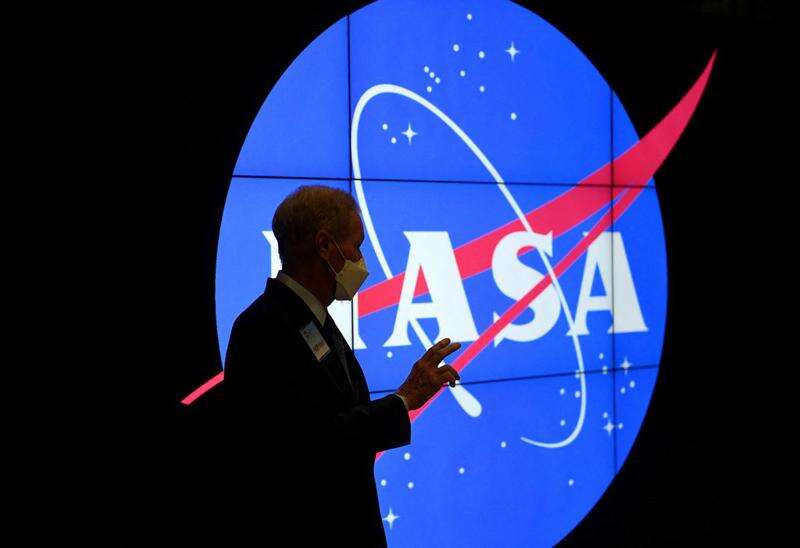
In this file photo taken on November 05, 2021 Nasa Administrator Bill Nelson speaks during a visit to the National Aeronautics and Space Administration (NASA) Goddard Space Flight Center in Greenbelt, Maryland.
Contact with the spacecraft was lost in December 2025, and after months of silence, NASA has accepted the loss of the probe, which is believed to still be in orbit around Mars. The US space agency announced Wednesday that it will investigate the cause of the communication failure.
For Shannon Curry, an astrophysics professor involved in the flight, it was the “best Mars mission ever.”
Despite the mission's end, scientists involved expressed satisfaction with its achievements. Astrophysics professor Shannon Curry described it as the "best Mars mission ever," highlighting its contribution to understanding atmospheric escape, the process by which atmospheric gases are lost to space. "We now have a better understanding of atmospheric escape at Mars than at any other planet, including Earth, and consequently Mars serves as an incredible natural laboratory for understanding rocky planet atmosphere," Curry stated.
We now have a better understanding of atmospheric escape at Mars than at any other planet, including Earth, and consequently Mars serves as an incredible natural laboratory for understanding rocky planet atmosphere.
Tiffany Morgan, chief of NASA's exploration program, added that MAVEN "profoundly advanced our understanding of Mars’s atmosphere, climate history, and habitability." Beyond its scientific objectives, the MAVEN probe also played a vital role as a communications relay for robots operating on the Martian surface, a function that will now need to be covered by other orbiters.
The MAVEN “profoundly advanced our understanding of Mars’s atmosphere, climate history, and habitability.”
DistantNews Editorial
Originally published by Jamaica Observer in English. Translated, summarized, and contextualized by our editorial team with added local perspective. Read our editorial standards.
More Stories



From Our Blog

What Gets Lost (and Found) When News Is Translated

The Critical Role of Diaspora Media in Global News

What Travellers Should Know About Countries with Restricted Press

A Digital Nomad's Guide to Following Local News

How the Same Story Looks Different in Different Countries
