


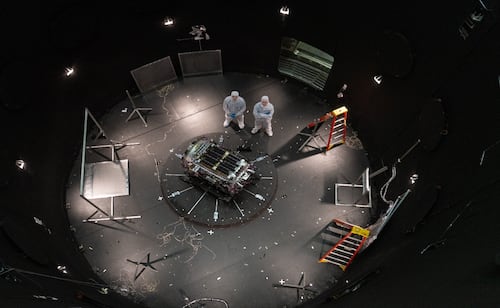
NASA launches mission to rescue obsolete telescope
Translated from Spanish, summarized and contextualized by DistantNews.
At a glance
News
Sources not specified
Ongoing story
- NASA launched a robotic mission to prevent an obsolete telescope from disintegrating in orbit.
- The dangerous operation, costing $30 million, involves a robot docking with the Swift satellite and boosting it to a higher orbit.
- If successful, the mission could extend the telescope's operational life for years, allowing it to continue studying gamma-ray bursts.
NASA has initiated a risky robotic mission aimed at saving its obsolete Swift space telescope from atmospheric disintegration. The operation, which began Friday from a Pacific atoll, is expected to take several months.
The mission involves a specially designed robot, launched by a Pegasus rocket from an airplane, that must first reach Swift's orbit. Once there, it will orbit the satellite, dock using robotic arms, and then attempt to boost the telescope approximately 300 kilometers higher. This maneuver is intended to place Swift into a stable orbit, preventing its fiery reentry into Earth's atmosphere and potentially extending its mission for years.
With an estimated budget of $30 million, this endeavor is unprecedented in its goal to salvage a telescope that originally cost $250 million. The Swift telescope is crucial for studying gamma-ray bursts, the universe's most powerful explosions. Despite the numerous risks involved, NASA's astrophysics division director, Shawn Domagal-Goldman, expressed gratitude for the opportunity to attempt the rescue, highlighting the mission's ambitious and challenging nature.
We are very grateful to have the opportunity to at least try.
DistantNews Editorial
Originally published by El Universal in Spanish. Translated, summarized, and contextualized by our editorial team with added local perspective. Read our editorial standards.
More Stories



From Our Blog

What Press Freedom Means for the News You Read

What Gets Lost (and Found) When News Is Translated

The Critical Role of Diaspora Media in Global News

What Travellers Should Know About Countries with Restricted Press

A Digital Nomad's Guide to Following Local News
