


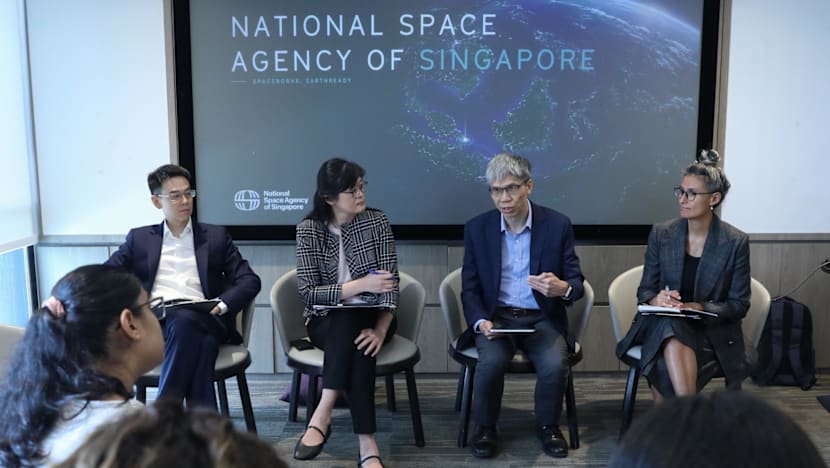
National space agency aims to set up satellite mission operations centre by first quarter of 2027
Summarized and contextualized by DistantNews.
At a glance
News
Named sources
New plan
- Singapore's National Space Agency (NSAS) plans to establish a national satellite mission operations center by the first quarter of 2027.
- The center will manage national satellite missions for applications like disaster response and maritime security, and will house space situational awareness capabilities.
- With the global satellite population expected to grow significantly, NSAS aims to enhance its own monitoring and safety measures.
The newly established National Space Agency of Singapore (NSAS) is working towards launching a national satellite mission operations center by the first quarter of 2027. This facility will serve as the hub for planning and tasking Singapore's national satellite missions, which currently focus on Earth observation for critical applications.
These applications include disaster response, monitoring marine pollution, enhancing maritime security, assessing coastal infrastructure, and urban planning. The center will also be equipped with space situational awareness capabilities, crucial for tracking the space environment and protecting Singapore's satellites from potential collisions and solar events. The NSAS aims to coordinate space-enabled operations across various government agencies and integrate satellite data services more effectively.
You need to spend a little bit of time to unpack how you could change the workflows or how you could improve (them) significantly, and we are basically trying to find those use cases at this point.
NSAS chief executive Ngiam Le Na highlighted the increasing congestion in low Earth orbit, with an estimated 11,000 satellites expected to grow tenfold by 2035. This escalating risk of debris collisions underscores the importance for Singapore to develop its independent space situational awareness capabilities, as it currently relies on commercial data sources.
Deputy chief executive Dr Desmond Lim noted that many government agencies currently have limited awareness of how space technology can impact their operations. NSAS is actively engaging with these agencies to identify specific use cases and integrate satellite technology into their workflows, potentially focusing on geospatial analytics, maritime and aviation incident management, and urban planning. The agency is also considering future satellite needs, balancing technological advancements with evolving government requirements and budgets.
The risk of debris collisions is expected to increase significantly with congestion, so it is important for Singapore to build up its own space situational awareness capabilities, she said.
DistantNews Editorial
Originally published by CNA. Summarized and contextualized by our editorial team with added local perspective. Read our editorial standards.
More Stories



From Our Blog

What Gets Lost (and Found) When News Is Translated

The Critical Role of Diaspora Media in Global News

What Travellers Should Know About Countries with Restricted Press

A Digital Nomad's Guide to Following Local News

How the Same Story Looks Different in Different Countries
