


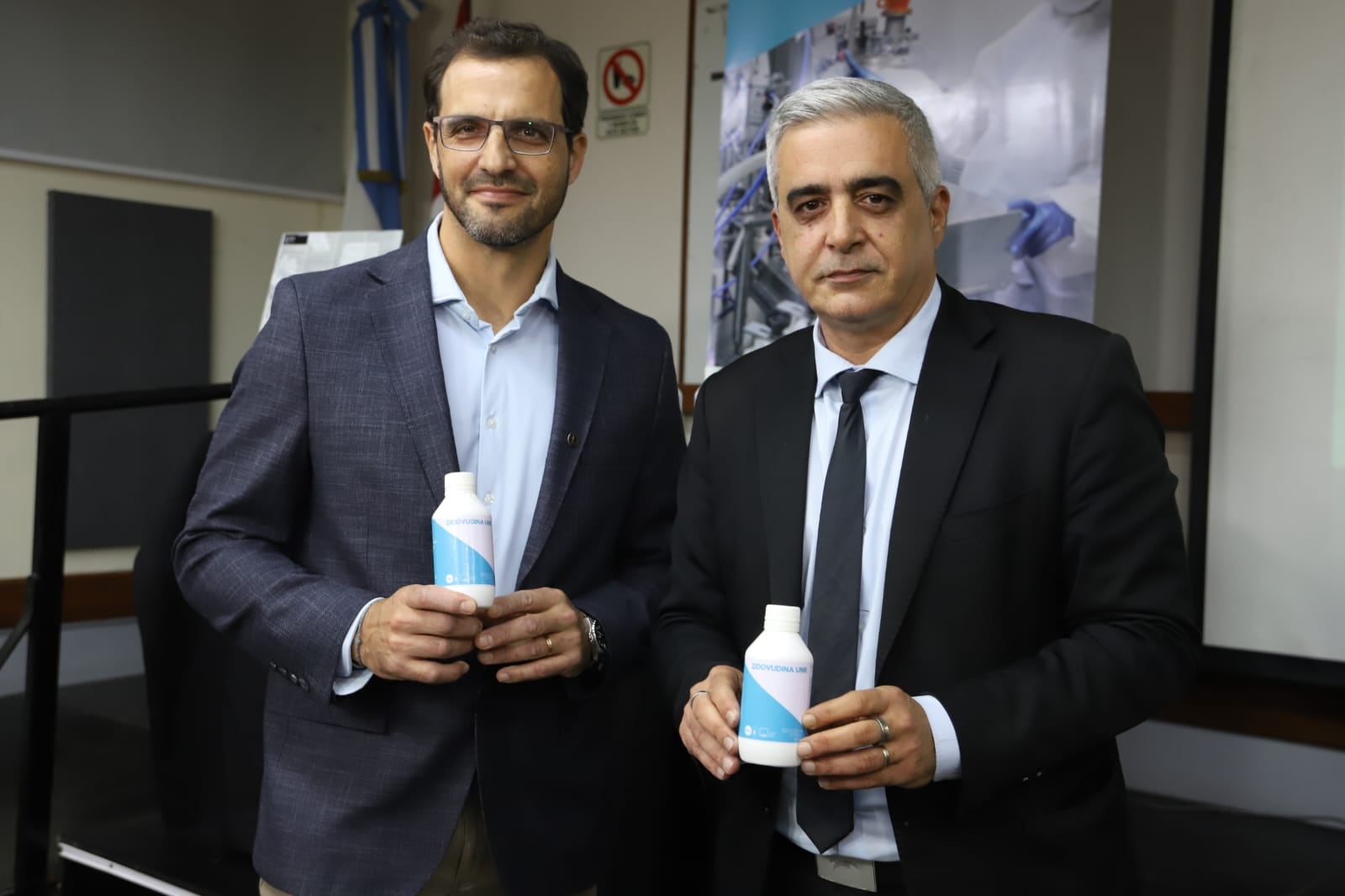
National University of Rosario to produce HIV medication for pregnant women and children
Translated from Spanish, summarized and contextualized by DistantNews.
At a glance
News
Sources not specified
New plan
- The National University of Rosario's pilot plant received authorization to produce zidovudine syrup, an HIV medication for pregnant women and children.
- This marks the first time an Argentine university facility has registered a pharmaceutical specialty, with production expected to begin in the second half of the year.
- The university aims to improve access to the medication, which is currently imported or produced by a single private lab at a high cost.
The National University of Rosario (UNR) in Argentina has achieved a significant milestone in pharmaceutical production, receiving authorization from the National Administration of Medicines, Foods, and Medical Technology (Anmat) to manufacture zidovudine syrup. This medication is crucial for treating HIV in pregnant women and pediatric patients.
After a long process of research, development and innovation, as well as seeking financing.
The UNR's Pilot Plant for Drug Production is set to commence manufacturing in the second half of this year, with the drug anticipated to be available by 2026. This development is historic, as it represents the first time a university-based facility in Argentina has successfully registered a pharmaceutical specialty. The achievement follows extensive research, development, and efforts to secure financing.
Zidovudine is a medication that has historically faced supply challenges in Argentina, often requiring importation. Currently, its production relies on a single private laboratory, and its high cost, approximately $110,000 pesos, significantly limits access for patients. The UNR's initiative aims to address this issue by providing a more accessible and continuous supply.
In terms of scientific and healthcare development, it is one of the most relevant events in the entire history of the UNR.
Rector Franco Bartolacci hailed the achievement as one of the most relevant in the UNR's history for scientific and healthcare development. Paula García, head of Quality at the Pilot Plant, emphasized that it signifies a "paradigm shift," moving beyond laboratory research into highly regulated environments. The next step involves obtaining commercialization registration from Anmat.
We have moved beyond laboratory research to operate in highly regulated environments.
The pilot plant, established in 2006, is the first in Argentina's university sector to comply with national public laboratory standards. Dean Andrés Sciara highlighted the university's role in transforming knowledge into practical solutions, particularly for medications that may not be commercially attractive. The initial production target is 15,000 bottles, primarily for public hospitals nationwide.
This advance synthesizes the role that Public Universities must assume. Not only to generate knowledge, but also to transform it into concrete solutions for the problems of our community.
DistantNews Editorial
Originally published by La Nación in Spanish. Translated, summarized, and contextualized by our editorial team with added local perspective. Read our editorial standards.
More Stories



From Our Blog

What Gets Lost (and Found) When News Is Translated

The Critical Role of Diaspora Media in Global News

What Travellers Should Know About Countries with Restricted Press

A Digital Nomad's Guide to Following Local News

How the Same Story Looks Different in Different Countries
