


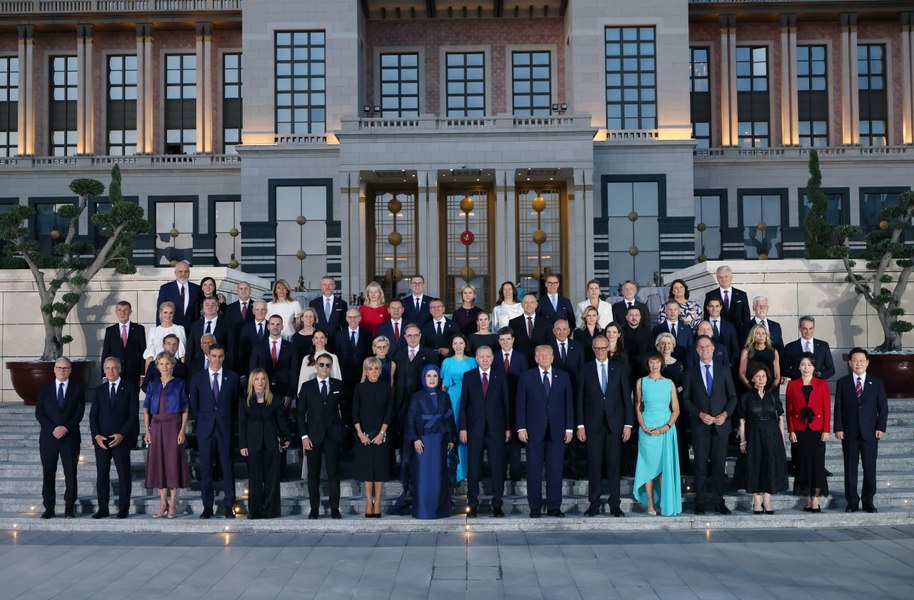
NATO Summit Declaration: Key Decisions on Collective Defense, Ukraine, and Iran
Translated from Romanian, summarized and contextualized by DistantNews.
At a glance
News
Sources not specified
New plan
- NATO leaders adopted a final declaration at the Ankara summit, outlining the alliance's future actions and commitments.
- The declaration reaffirms collective defense under Article 5 and notes European allies' increased defense spending, though the US president urged further contributions.
- Long-term support for Ukraine was confirmed, alongside a call for Iran to never possess nuclear weapons and respect freedom of navigation in the Strait of Hormuz.
NATO leaders concluded their summit in Ankara by adopting a final declaration that charts the alliance's course on collective defense, support for Ukraine, and regional security. The document reaffirms the unwavering commitment to Article 5, the cornerstone of collective defense, ensuring an attack on one ally is an attack on all.
an attack against one ally is considered an attack against all members of the Alliance.
European allies and Canada have significantly increased their defense investments, totaling over $139 billion in 2025. However, U.S. President Donald Trump reiterated concerns that Washington bears a disproportionate share of the collective defense costs, urging allies to increase their contributions.
The alliance also confirmed its steadfast support for Ukraine, emphasizing that European nations and Canada are shouldering the majority of security assistance. Leaders agreed this support must be equitable, predictable, and sustainable long-term, especially as the conflict initiated by Russia continues. The declaration also sent a clear message to Iran, stating it must never possess nuclear weapons and must respect freedom of navigation in the Strait of Hormuz, following recent escalations in the region.
Washington continues to bear a disproportionately large share of the costs of collective defense and has asked allies to contribute more.
Furthermore, NATO announced new military procurement contracts exceeding $50 billion. The declaration promotes expanding joint defense production capabilities and enhancing collaboration with the defense industry to accelerate the development and adoption of new military technologies. This focus on strengthening military capabilities reflects NATO's response to the ongoing war in Ukraine and heightened tensions in the Middle East.
NATO reaffirms that Iran must never possess nuclear weapons and calls on Tehran to fully respect freedom of navigation through the Strait of Hormuz.
DistantNews Editorial
Originally published by Adevărul in Romanian. Translated, summarized, and contextualized by our editorial team with added local perspective. Read our editorial standards.
More Stories
From Our Blog

What Gets Lost (and Found) When News Is Translated

The Critical Role of Diaspora Media in Global News

What Travellers Should Know About Countries with Restricted Press

A Digital Nomad's Guide to Following Local News

How the Same Story Looks Different in Different Countries
