

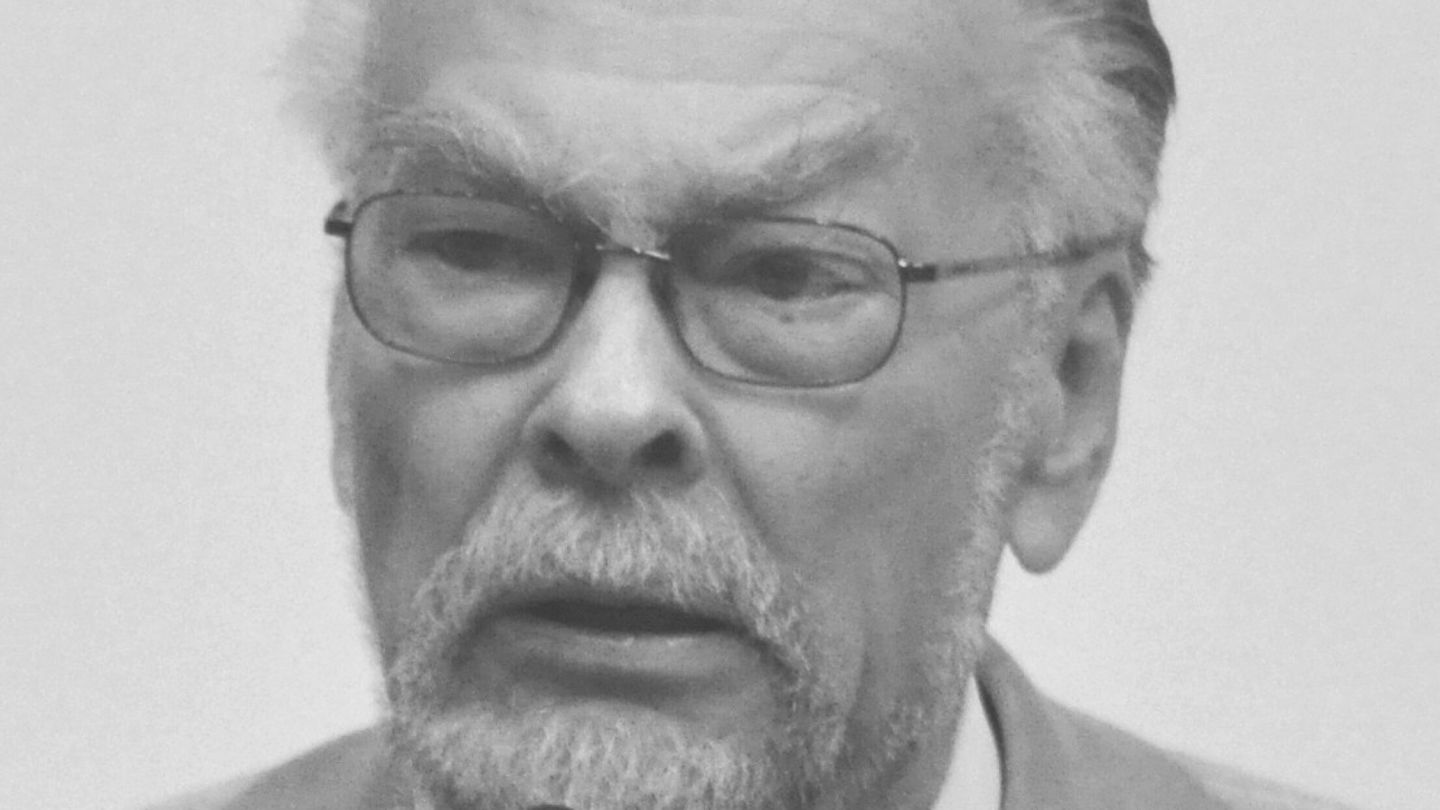
Naturalist and Science Popularizer Anto Leikola Dies at 89
Translated from Finnish, summarized and contextualized by DistantNews.
At a glance
In-depth
Named sources
Outcome reported
- Professor Anto Leikola, a naturalist and popularizer of science, died at his home in Helsinki on June 18, 2026, at the age of 89.
- Leikola, who came from a family of academics and public figures, developed an early passion for nature and pursued studies in embryology, which led him to spend time in Philadelphia during the US civil rights movement.
- He had a distinguished career in publishing and academia, coining many Finnish animal names and fostering interdisciplinary research at the University of Helsinki.
Professor Anto Leikola, a prominent Finnish naturalist and science communicator, passed away at his Helsinki home on June 18, 2026, at the age of 89. Born in Helsinki on June 8, 1937, Leikola hailed from a distinguished lineage, with his father's side tracing back to clergy and his mother's side to a family of cultural and political figures.
His early life was marked by a strong inclination towards public engagement, influenced by his schooling and friendships with notable figures like Matti Kling and Pentti Saarikoski. However, his deepest passion lay in nature. It was through the Nature League that he met his life partner, Marjatta.
Leikola's worldview expanded significantly when, as an Asla scholarship recipient studying embryology, he moved with his family to a middle-class Black neighborhood in Philadelphia. This period in the United States during the 1960s coincided with the burgeoning civil rights movement, and his home was filled with the sounds of artists like Paul Robson and Buffy Sainte-Marie. The two years spent in America forged lifelong friendships within the international scientific community.
Upon his return to Finland, Leikola was appointed head of WSOY's non-fiction department in 1969. He viewed popular education as a platform for improving the world. During this time, he published his first essay collection, "Biologin maailmasta" (From a Biologist's World), which he considered his most personal work, alongside his late-life poetry collection and his translation of "Suuren eläinkirjan" (The Great Animal Book). In this translation, he devised numerous Finnish names for animals that have since become standard.
Facing conflicts over the future of WSOY, the conflict-averse Leikola returned to academia in 1972. He found a home at the University of Helsinki's history department, where his personal professorship in the history of learning allowed him to conduct research and teach across natural and humanities disciplines without administrative burdens. He was an active member of various civic organizations, including the Finnish Society for the History of Science, the Aleksis Kivi Society, the Finnish Association of Non-fiction Writers, and the Rozentals Society.
In 1986, Leikola purchased Pölkönhovi manor in Southern Savonia, inspired by his childhood summers. Pölkönhovi became a hub for a "Chekhovian" lifestyle for his three grandchildren and the circle of friends from the cultural magazine Valvoja. Returning to Helsinki in the new millennium, his social sphere narrowed. After his wife Marjatta's death in March, Anto remarked, "It is lonely."
His personal library bore the inscription "Ex ovo omnia," reflecting William Harvey's 17th-century insight that life does not arise from nothing but begins with an egg. As a embodiment of classical education, Leikola was also familiar with Cicero's "Moriendum est omnibus" – all are mortal.
DistantNews Editorial
Originally published by Helsingin Sanomat in Finnish. Translated, summarized, and contextualized by our editorial team with added local perspective. Read our editorial standards.
More Stories

From Our Blog

What Gets Lost (and Found) When News Is Translated

The Critical Role of Diaspora Media in Global News

What Travellers Should Know About Countries with Restricted Press

A Digital Nomad's Guide to Following Local News

How the Same Story Looks Different in Different Countries
