


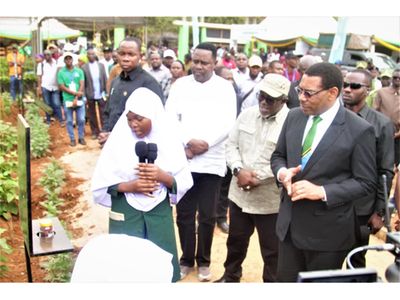
Nchemba urges research to boost Tanzania's agriculture, food security
Translated from English, summarized and contextualized by DistantNews.
At a glance
News
Sources not specified
New plan
- Tanzanian Prime Minister Nchemba urged agricultural institutions to invest in research and translate findings into practical results to boost productivity, markets, and food security.
- He encouraged young Tanzanians to embrace modern agriculture, highlighting technology's role and the potential for graduates to lead the sector.
- The government pledged to improve infrastructure supporting agriculture, with the Prime Minister noting the rapid pace of investment aligns with Vision 2050 objectives.
Prime Minister Nchemba emphasized the critical role of research in transforming Tanzania's agriculture, livestock, and fisheries sectors. He stated that President Hassan's administration has significantly funded research initiatives aimed at enhancing productivity, expanding market access, and ensuring food security.
During a visit to the Eastern Zone Nanenane agricultural exhibitions, Nchemba urged agricultural research bodies like Tari and Sua to translate their findings into tangible benefits for the sector. He observed the sector's rapid growth and its capacity to create employment, particularly for the youth. Nchemba encouraged young Tanzanians to actively participate in agriculture, dispelling the notion that it is an outdated occupation.
"Modern agriculture is no longer practiced in the traditional way. It can be successfully undertaken by young people, many of whom are graduates of various universities in the country, because they understand and can use modern technologies," Nchemba said. He cited an example of a young graduate using a drone for irrigation on a seven-hectare farm in just 20 minutes.
Modern agriculture is no longer practiced in the traditional way. It can be successfully undertaken by young people, many of whom are graduates of various universities in the country, because they understand and can use modern technologies.
The Prime Minister also pledged continued government investment in infrastructure to bolster agricultural production. He noted that the exhibition's theme, "Identify markets, increase productivity and implement Vision 2050," was already showing signs of achievable objectives due to the sector's swift investment pace. Nchemba also called for collaboration between farmers and livestock keepers, urging them to work together to increase production, which is vital for industrial development.
Minister for Livestock and Fisheries, Dr. Bashiru Ally, identified Morogoro as a hub for agricultural transformation, partly due to Sokoine University of Agriculture. He praised the university's contributions but urged continued advancement in research, innovation, and training. Morogoro Regional Commissioner Adam Malima highlighted the exhibitions' improved standard, showcasing technologies that enable practical application of knowledge and increased productivity.
For example, I met a young graduate at the Sugar Board pavilion who can use a drone to irrigate a seven-hectare farm within 20 minutes.
DistantNews Editorial
Originally published by The Citizen in English. Translated, summarized, and contextualized by our editorial team with added local perspective. Read our editorial standards.
More Stories


From Our Blog

What Gets Lost (and Found) When News Is Translated

The Critical Role of Diaspora Media in Global News

What Travellers Should Know About Countries with Restricted Press

A Digital Nomad's Guide to Following Local News

How the Same Story Looks Different in Different Countries
