


NDRRMA chief Dharmaraj Upreti on early warning system, survivor rescue and relief management
Summarized by DistantNews. Read the original for the full story.
At a glance
Interview
Named sources
Ongoing story
- NDRRMA chief Dharmaraj Upreti says blocked roads have made helicopter operations central to rescue and relief efforts after the August 26 Bhotekoshi flood.
- The authority has coordinated the Nepali Army, Nepal Police, Armed Police Force and private helicopter operators, while sending food, medicines and oxygen to affected areas.
- Upreti says 3,500 people were rescued in one day and describes plans for multi-agency operations and cross-border early warnings.
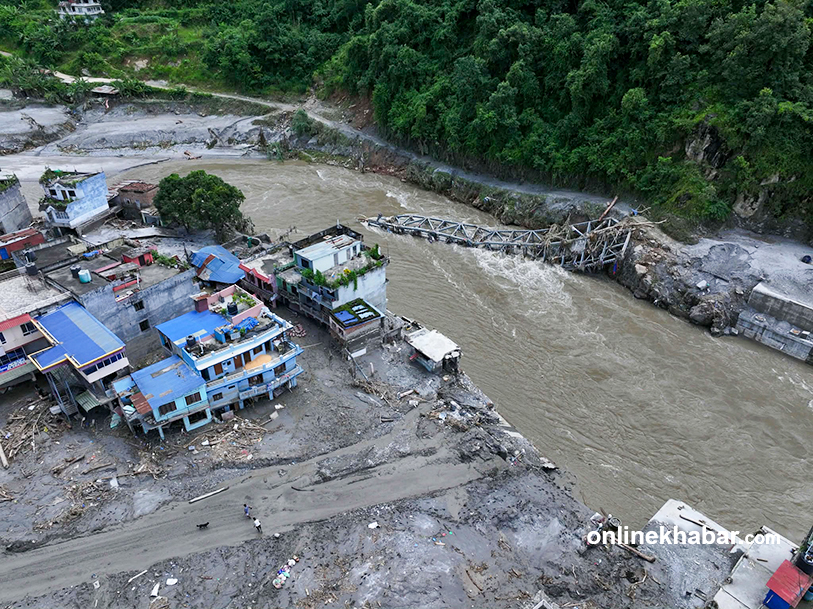
Blocked roads have left helicopters as Nepal’s main route for rescuing survivors and delivering relief after the August 26 Bhotekoshi River flood, according to NDRRMA chief executive Dharmaraj Upreti. He said helicopters can carry only limited supplies and need suitable landing zones, but the authority is using private operators alongside the Nepali Army.
The flood swept through settlements along the river basin in Rasuwa, Nuwakot, Gorkha and Chitwan. Five days later, at least 780 people had been confirmed dead, while the full number of deaths, missing people, injuries and damage remained unconfirmed.
Upreti said the authority had begun prioritising medical supplies. Teams sent food and medicines to Rasuwa, including the Uttar Gaya area, after complaints about difficult rescues and food shortages. The response also includes oxygen cylinders and ready-to-eat dry food such as biscuits.
Infrastructure repairs have started in parallel. The Nepal Electricity Authority restored power in Nuwakot, while Nepal Telecom and Ncell worked to restore telephone towers. Upreti said rescuers brought 350 people out of one tunnel and rescued 500 people on Friday morning, contributing to a reported single-day total of 3,500 rescues.
The NDRRMA formed 12 teams to prevent duplication and deployed the Nepali Army, Nepal Police and Armed Police Force. Upreti’s interview also covers precautions for the coming days, including early-warning coordination across borders, and the management of displaced people as search, rescue, relief and rehabilitation operations continue.
About this summary
Originally published by Kathmandu Post. Summarized and contextualized automatically by DistantNews, with a note on how the source frames the story. Not individually reviewed before publishing. How this works.
More Stories


From Our Blog

What Gets Lost (and Found) When News Is Translated

The Critical Role of Diaspora Media in Global News

What Travellers Should Know About Countries with Restricted Press

A Digital Nomad's Guide to Following Local News

How the Same Story Looks Different in Different Countries
