

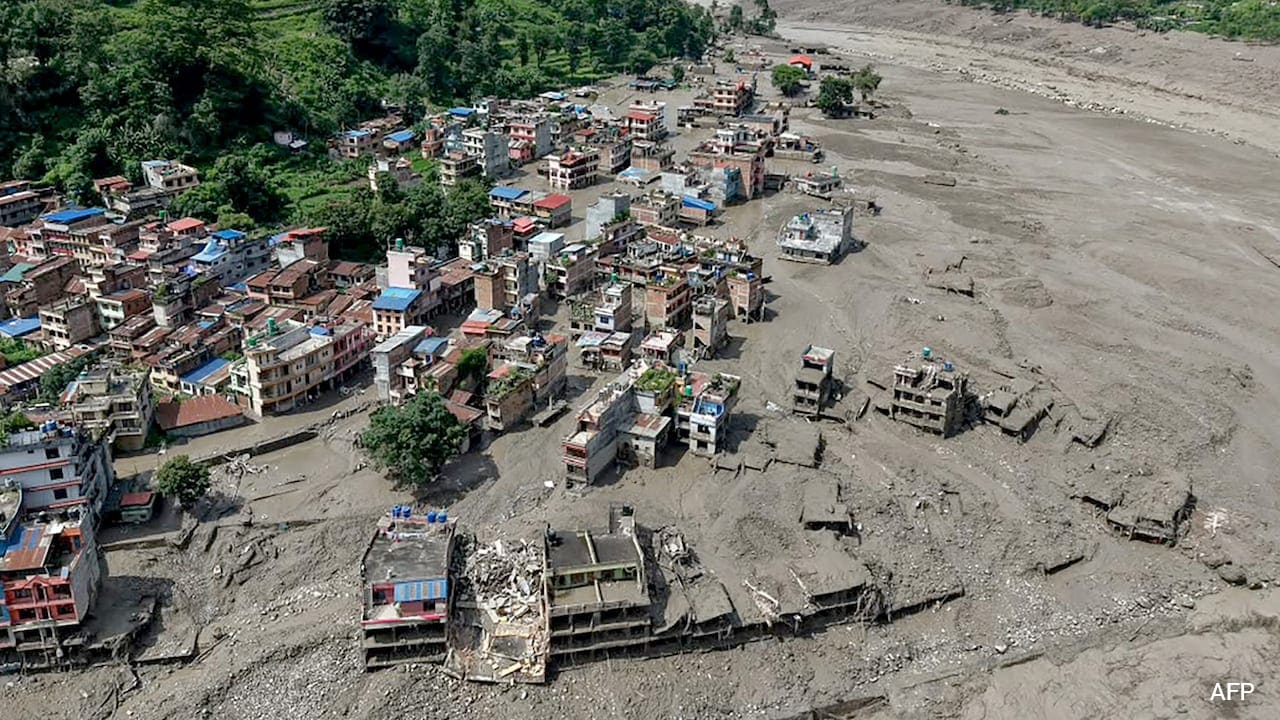
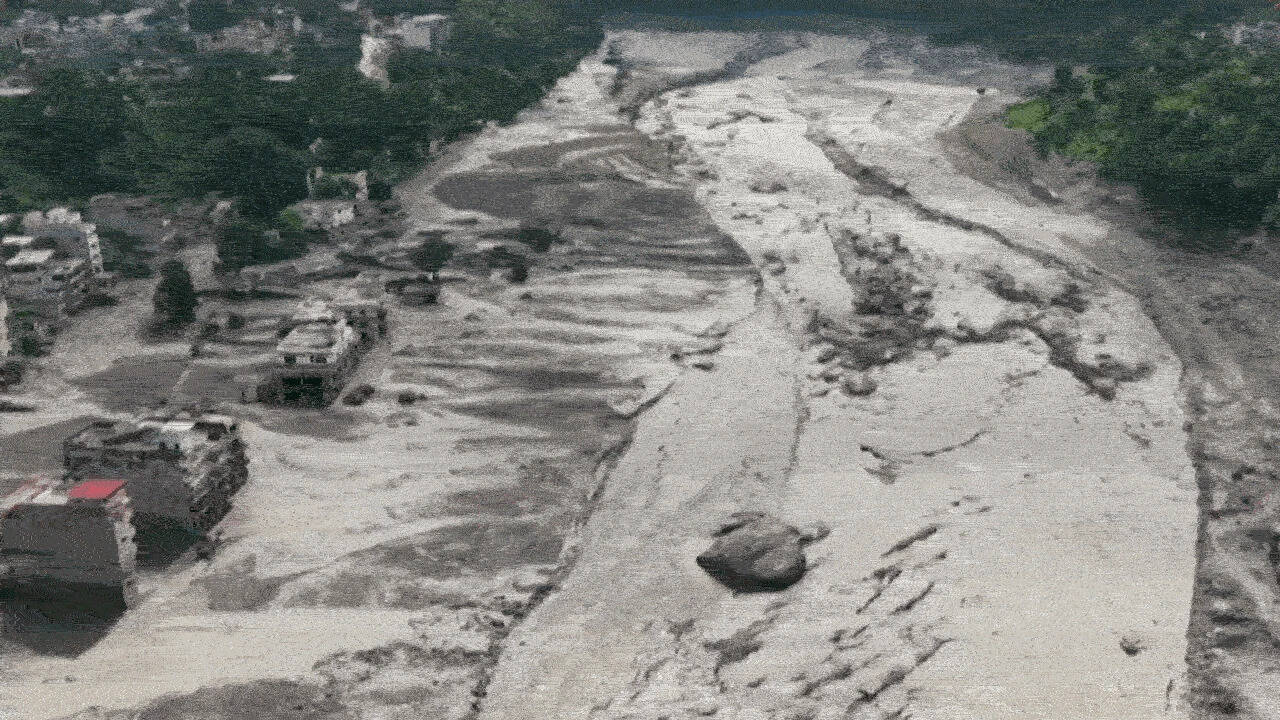
Nepal floods: Aerial views reveal trail of destruction after powerful surge of ice, mud and boulders
Summarized by DistantNews. Read the original for the full story.
At a glance
News
Sources not specified
Ongoing story
- A massive flood in Nepal has caused widespread devastation, particularly in the northern Rasuwa district.
- The flood, originating from the Bhote Koshi River, carried a destructive mix of ice, rocks, mud, and debris, destroying villages and infrastructure.
- The disaster highlights a growing threat of increasingly frequent and severe floods, landslides, and other natural hazards in the Hindu Kush Himalayas.
Nepal is grappling with the aftermath of a catastrophic flood that swept through its northern regions, leaving a devastating trail of destruction. The powerful surge, originating from the Bhote Koshi River, unleashed a torrent of ice, mud, rocks, and boulders, obliterating villages and infrastructure in its path. At least 165 lives have been lost, with over 1,300 people reported missing in the wake of the disaster.
Rasuwa district, situated near the China-Nepal border, has been identified as one of the worst-hit areas. Aerial views reveal a landscape transformed by nature's fury, with settlements seemingly wiped away and roads vanished beneath layers of mud and debris. The river itself appears to have altered its course, engulfing former settlements and spreading destruction across the land.
This flash flood, which caused river levels to rise dramatically in downstream areas like Galchhi, underscores a broader and escalating threat facing the Hindu Kush Himalayan region. According to the International Centre for Integrated Mountain Development (ICIMOD), floods, landslides, avalanches, and droughts are becoming more frequent and severe. Rapid environmental changes in water, land, and air are posing significant risks to millions of people residing in this ecologically sensitive zone.
About this summary
Originally published by Times of India. Summarized and contextualized automatically by DistantNews, with a note on how the source frames the story. Not individually reviewed before publishing. How this works.
More Stories


From Our Blog

What Press Freedom Means for the News You Read

What Gets Lost (and Found) When News Is Translated

The Critical Role of Diaspora Media in Global News

What Travellers Should Know About Countries with Restricted Press

A Digital Nomad's Guide to Following Local News
