


Nepal floods damage 20 schools; teachers, students missing
Translated from English and summarized by DistantNews. Read the original for the full story.
At a glance
News
Sources not specified
Ongoing story
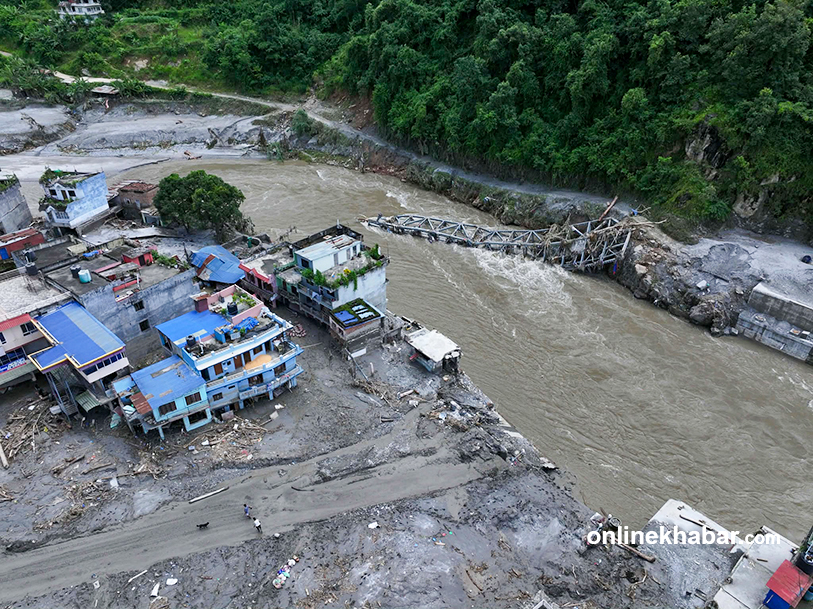
- Wednesday's Bhotekoshi flood damaged 20 schools across Rasuwa, Nuwakot, and Dhading districts in Nepal, with classrooms filled with mud and sand.
- Several teachers and students are missing or out of contact, including four teachers from Dhading and three civil engineering students on an internship.
- Key educational facilities, such as Tribhuvan Multiple Campus and a women's hostel, were buried by the floodwaters.
The recent Bhotekoshi flood has inflicted significant damage on educational infrastructure in Nepal, with 20 schools across Rasuwa, Nuwakot, and Dhading districts suffering varying degrees of destruction. Mud, sand, and silt inundated classrooms, disrupting learning environments. The Ministry of Education, Science and Technology reported that five schools in Rasuwa, seven in Nuwakot, and eight in Dhading were affected by the disaster.
Compounding the physical damage, the flood has led to the disappearance of several teachers and students. Four teachers from Dhading who were on a pilgrimage to Gosainkunda are currently out of contact. In Rasuwa, only three out of ten teachers at Nepal Rastriya Basic School remain in contact. Meanwhile, three students from Trishuli Community Boarding School in Nuwakot are reported missing.
Further complicating the situation, Kathmandu University has established a search and rescue committee for three fourth-year civil engineering students who were undertaking an internship at the Upper Trishuli-3B hydropower project in Nuwakot and have been out of contact since the flooding. The Tribhuvan Multiple Campus in Nuwakot and the women's hostel of Tribhuvan Trishuli Secondary School were buried by the flood, highlighting the extensive impact on educational facilities.
About this summary
Originally published by Kathmandu Post in English. Translated, summarized, and contextualized automatically by DistantNews, with a note on how the source frames the story. Not individually reviewed before publishing. How this works.
More Stories

From Our Blog

What Gets Lost (and Found) When News Is Translated

The Critical Role of Diaspora Media in Global News

What Travellers Should Know About Countries with Restricted Press

A Digital Nomad's Guide to Following Local News

How the Same Story Looks Different in Different Countries
