


Nepal floods devastate merchants ahead of crucial festival season
Translated from English and summarized by DistantNews. Read the original for the full story.
At a glance
In-depth
Named sources
Ongoing story
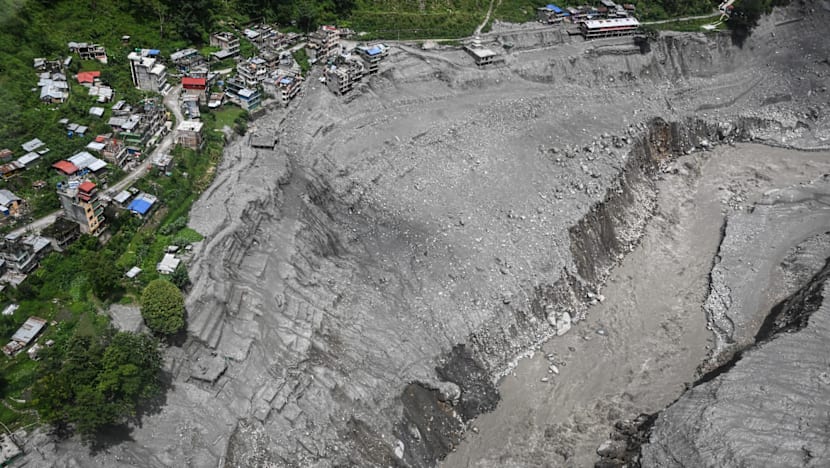
- Flash floods destroyed shops and merchandise in Nepal’s Trishuli Bazaar, leaving traders with debts and damaged supply chains.
- At least 1,000 importers were affected, while the disaster has killed more than 1,200 people and damaged major border crossings.
- Weaker festival spending and higher replacement costs could further strain Nepal’s roughly $45 billion economy, which relies heavily on private consumption and imports.
Ashok Kumar Chaurasiya escaped his textile shop in Nepal’s Trishuli Bazaar with little more than the clothes he was wearing. The 62-year-old trader had built six shops after moving from India to Nepal about four decades ago, and had filled them with goods for the coming festival season.
On Aug. 26, Chaurasiya, his son and his mother had only minutes to react after receiving a warning. They raced uphill on a motorcycle as the water reached the settlement. “If we had been 20 seconds late, three of us in the family would have gone,” he said. The floods destroyed his shops and merchandise worth 45 million Nepali rupees, or about S$375,000. None of the goods was insured. “God has put me in such a position that now I need debt,” he said.
The timing has deepened the economic damage. Nepal’s Hindu festival season, including Dashain and Tihar, runs from September to November and normally brings a sharp rise in spending. Many merchants had borrowed money or committed to supplier payments while building their inventories. Now their goods have been destroyed or stranded, even as loans and bills remain due.
If we had been 20 seconds late, three of us in the family would have gone.
Jayant Kumar Agrawal, secretary-general of the Nepal Foreign Trade Association, estimates that at least 1,000 importers suffered losses. Replacing merchandise will cost more because trade routes have been disrupted. Insured businesses may also struggle to prove their losses after customs offices and records were swept away.
The effects could spread beyond the flooded areas. The disaster has killed more than 1,200 people, and households may reduce festival spending as the country responds. Private consumption accounted for about 82% of Nepal’s gross domestic product in the fiscal year that ended in mid-July 2026. Imports of goods and services represented about 35% of GDP, making destroyed or closed border crossings a wider problem for the economy. The government has announced free medical care, shelter and a planned relief and concessional-finance package, but the details have not yet been released.
God has put me in such a position that now I need debt.
About this summary
Originally published by The Straits Times in English. Translated, summarized, and contextualized automatically by DistantNews, with a note on how the source frames the story. Not individually reviewed before publishing. How this works.
More Stories


From Our Blog

News in Translation: What Gets Lost, and How We Keep the Framing

Diaspora Media: How Communities Abroad Follow Home

Traveling Where the Press Is Not Free: How to Read the News There

The Digital Nomad's Guide to Local News

The Same Story, Different Countries: How Coverage Changes at the Border
