

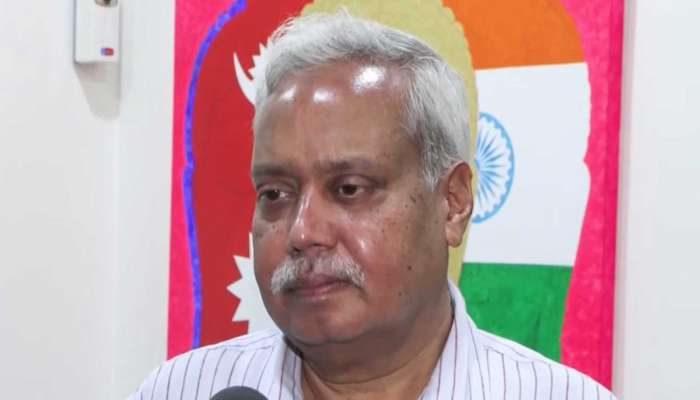

Nepal has not sought compensation from India, foreign minister says
Translated from English and summarized by DistantNews. Read the original for the full story.
At a glance
News
Named sources
Ongoing story
- Foreign Minister Shisir Khanal said Nepal had not requested financial compensation from India or any other country after catastrophic flash floods.
- He urged China, India and Nepal to improve preparedness for shared climate risks in the Himalayas and asked the global community to support smaller nations.
- Khanal thanked India for emergency assistance, including rescue equipment, bridge components, pumps and relief supplies.
Nepal's Foreign Minister Shisir Khanal has rejected reports that Kathmandu formally demanded climate compensation from India after catastrophic flash floods.
“Neither I nor anyone in the Ministry of Foreign Affairs or Government of Nepal has claimed or asked for compensation from India or any other country, including China or the United States,” Khanal told ANI.
Neither I nor anyone in the Ministry of Foreign Affairs or Government of Nepal has claimed or asked for compensation from India or any other country, including China or the United States.
He said Nepal's appeal was for the disaster to be viewed through the effects of climate change, rather than as a one-time event requiring one-time support. The Himalayan region's shared environmental systems, he said, meant China, India and Nepal all faced similar pressures.
“I’ve also mentioned that all three countries, China, India, and Nepal, face and share similar environmental ecosystems. We are all impacted by climate change in the Himalayas as well. Our call is for all these three countries to come together to be better prepared,” Khanal said. He urged the wider international community to support smaller countries such as Nepal.
Our call is for all these three countries to come together to be better prepared, but also for the global community to support and, particularly, to look at this disaster not just as a one-time event or to look at this as one-time support, but to think about the impact rising temperatures and climate change are having on communities across the world.
Search, rescue and rehabilitation operations continued in flood-affected areas. India was among the first countries to send aid, providing emergency rescue equipment, modular bridge components, dewatering pumps and essential relief materials.
We stand ready to collaborate to save our civilisation, our heritage, our culture and our future together.
Indian airlifts also carried medical supplies, generators, solar lamps, tents and water purification units. The first relief aircraft arrived in Nepal on August 26 with 10 tonnes of supplies, including temporary shelters, blankets, hygiene kits, solar lamps and medicines. Khanal said Indian officials had remained in contact with Kathmandu and were ready to provide further assistance.
“We stand ready to collaborate to save our civilisation, our heritage, our culture and our future together,” he said.
In this disaster context, right after the disaster, we began to receive communication from Indian officials and they have provided all kinds of support and they have said they are standing ready to provide any support that the government of Nepal needs.
About this summary
Originally published by Times of Oman in English. Translated, summarized, and contextualized automatically by DistantNews, with a note on how the source frames the story. Not individually reviewed before publishing. How this works.
More Stories
From Our Blog

News in Translation: What Gets Lost, and How We Keep the Framing

Diaspora Media: How Communities Abroad Follow Home

Traveling Where the Press Is Not Free: How to Read the News There

The Digital Nomad's Guide to Local News

The Same Story, Different Countries: How Coverage Changes at the Border
