


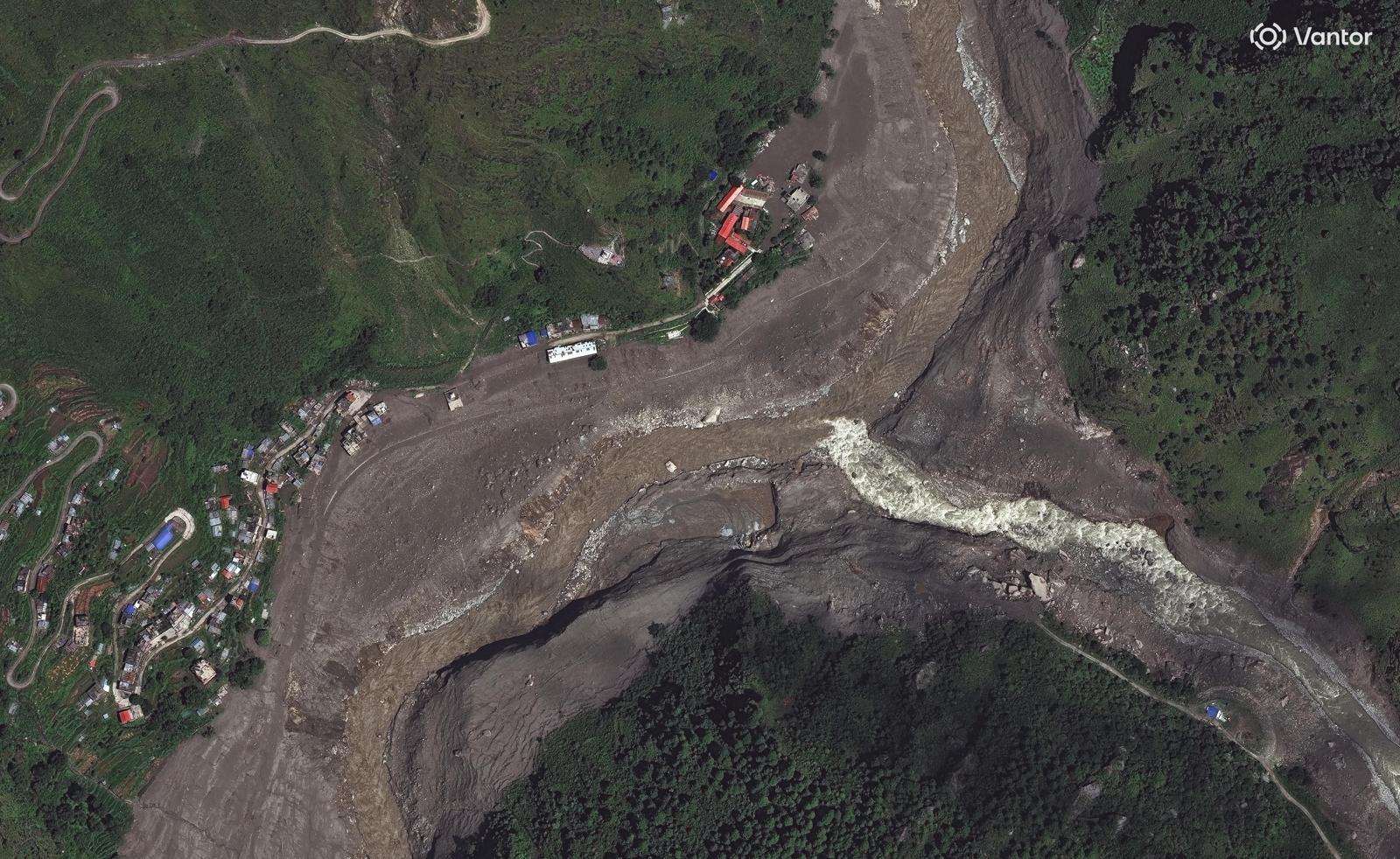
Nepal landslide triggers massive floods, creating two new lakes and raising fears of a second disaster
Translated from Korean and summarized by DistantNews. Read the original for the full story.
At a glance
News
From a news agency
Ongoing story
- A massive landslide and flash flood near Nepal's border with Tibet has resulted in at least 392 deaths and over 1,400 missing.
- The disaster caused debris to dam rivers, forming two large lakes on both sides of the border.
- Authorities warn of a potential secondary flood as lake water levels continue to rise, urging evacuations.
A devastating landslide and subsequent flash flood in the border region between Nepal and China's Tibet has claimed at least 392 lives as of Thursday evening, with the number of missing persons exceeding 1,400. The disaster, which occurred on August 27th, has dramatically altered the landscape, forming two massive lakes by damming rivers with the immense volume of displaced soil and rocks.
Nepalese police reported recovering 389 bodies, while Chinese state media confirmed three deaths on their side, bringing the total confirmed fatalities to 392. The scale of the disaster is further highlighted by the 1,468 individuals reported missing by Nepalese authorities. Among the missing are 540 foreign nationals from over 20 countries, including a significant number of Indian pilgrims.
Authorities are now sounding the alarm over the potential for a catastrophic secondary flood. The newly formed lakes pose a significant risk as their water levels continue to rise. Nepalese disaster management officials have issued urgent warnings, urging residents, travelers, and rescue personnel near the affected rivers to evacuate to higher ground due to the imminent danger of the lakes bursting.
Chinese water resource experts predict that approximately 3 million cubic meters of water, equivalent to about 1,200 Olympic-sized swimming pools, could flow into the dammed lakes over the next three days. The risk of a breach is considered highest around September 1st. Adding to the peril, forecasts indicate continued rainfall over the next week, further increasing the instability of the lakes and the potential for a devastating secondary flood.
The risk of the lakes bursting is highest around September 1st.
About this summary
Originally published by Dong-A Ilbo in Korean. Translated, summarized, and contextualized automatically by DistantNews, with a note on how the source frames the story. Not individually reviewed before publishing. How this works.
More Stories



From Our Blog

What Gets Lost (and Found) When News Is Translated

The Critical Role of Diaspora Media in Global News

What Travellers Should Know About Countries with Restricted Press

A Digital Nomad's Guide to Following Local News

How the Same Story Looks Different in Different Countries
