

Nepal-like Disaster Could Strike Europe, Experts Warn of Dangerous Areas
Translated from Croatian and summarized by DistantNews. Read the original for the full story.
At a glance
News
Sources not specified
Context piece
- Experts warn that glacial collapses and subsequent flood waves, like the one that killed hundreds in Nepal, pose a similar threat to European mountains.
- While European countries better monitor risk areas and can evacuate populations, the potential for disaster remains.
- The phenomenon involves glacial ice, rocks, and snow forming a destructive slurry that can cause massive floods and secondary damming risks.
A catastrophic event in Nepal, where a glacial collapse triggered a devastating flood wave and claimed hundreds of lives, serves as a stark warning for Europe. Experts now caution that similar dangers lurk in European mountains, though a crucial difference lies in the continent's enhanced monitoring capabilities and preparedness for timely evacuations.
It was essentially an ice slurry, a landslide of rocks, earth, and snow.
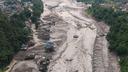
Glaciologist Jan Kavan described the Nepal event as a type of ice, rock, and snow avalanche. A massive slurry of debris surged down a valley, causing the river level to rise dramatically in just 30 minutes. This destructive flow obliterated roads, homes, and vital infrastructure, cutting off power, phone, and internet services in affected areas.
The danger doesn't necessarily end with the initial flood. The debris can form unstable natural dams, leading to water accumulation. Kavan highlighted that a subsequent flood wave could be even more severe than the first. A similar incident in Blatten, Switzerland, last May saw a village nearly buried by rock and ice, with the river dammed and a lake formed. However, Swiss authorities successfully evacuated residents, demonstrating a key advantage over the situation in Nepal.
Very often the second wave can be much worse.
The risk of glacial detachment in Europe is influenced by terrain, particularly steep transitions where ice becomes unstable. While the scale of potential disasters in Europe may generally be smaller than in the Himalayas due to the size and number of glaciers, unstable rock masses above some Norwegian fjords also present a risk of generating tsunami-like waves if they collapse into the sea. The vast and inaccessible nature of some Himalayan regions further complicates monitoring compared to Europe's more manageable, technologically supported oversight.
Nepal is a multifold more extreme area. The mountains and glaciers there are much larger, and there are significantly more of them.
About this summary
Originally published by Večernji List in Croatian. Translated, summarized, and contextualized automatically by DistantNews, with a note on how the source frames the story. Not individually reviewed before publishing. How this works.
More Stories



From Our Blog

What Gets Lost (and Found) When News Is Translated

The Critical Role of Diaspora Media in Global News

What Travellers Should Know About Countries with Restricted Press

A Digital Nomad's Guide to Following Local News

How the Same Story Looks Different in Different Countries
