


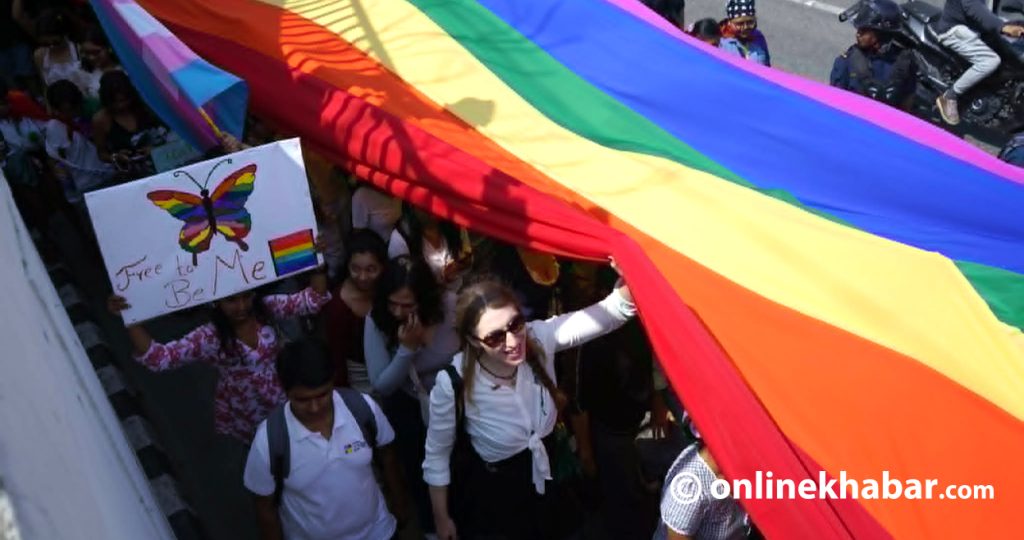
Nepal renames ministry to include gender and sexual minorities: What is the way forward?
Summarized and contextualized by DistantNews.
At a glance
News
Sources not specified
New plan
- Nepal's government renamed a ministry to include gender and sexual minorities, making it the first in South Asia to do so.
- The 'Ministry of Women, Children, Gender, Sexual Minorities and Social Security' will administer laws and social security for marginalized groups.
- Activists welcome the move but raise concerns about the lack of dedicated funding and institutional structure for the LGBTQIA+ community.
Nepal has become the first country in South Asia to explicitly include gender and sexual minorities in a federal ministry's name and mandate. The Government of Nepal renamed the Ministry of Women, Children and Senior Citizens to the ‘Ministry of Women, Children, Gender, Sexual Minorities and Social Security’ on May 13, 2026.
This significant change follows nearly two decades of advocacy by Nepal’s LGBTQIA+ community. The newly mandated ministry will be responsible for national protective laws, social security schemes, and ensuring the socio-political rights of gender and sexual minorities across the country. According to ILGA World, a global federation of LGBTQIA+ organizations, this move is a landmark achievement for the region.
Even the Inclusion Commission lacks a dedicated desk, unit, or sustained program focused specifically on GSM issues, making it difficult to systematically address the community’s concerns.
Despite the renaming, concerns remain regarding the practical implementation and representation. Sunil Babu Pant, a prominent LGBTQIA+ activist and the first openly gay Member of the Constituent Assembly, noted the absence of a dedicated constitutional or statutory commission for Gender and Sexual Minority (GSM) issues. He also highlighted that no openly GSM individual has been appointed as a constitutional commissioner, raising questions about meaningful representation in governance.
While the government has allocated USD 15 million to the renamed ministry for the upcoming fiscal year, there is no separate fund exclusively for the GSM community. Programs targeting this community must draw from the unified ministerial budget, potentially competing with established areas like women's health and childcare. Experts and activists point out that the ministry's institutional structure remains largely unchanged, with no dedicated budget line, additional staff, or directives to provincial or local governments for GSM inclusion. Bibek Magar, President of Queer Youth Nepal, expressed a critical view, stating that the renaming is not enough without concrete operationalization.
While I celebrate the decision of the renaming of the ministry to include GSM, I am also critical that this is NOT just the government’s at
DistantNews Editorial
Originally published by OnlineKhabar English. Summarized and contextualized by our editorial team with added local perspective. Read our editorial standards.
More Stories


From Our Blog

What Gets Lost (and Found) When News Is Translated

The Critical Role of Diaspora Media in Global News

What Travellers Should Know About Countries with Restricted Press

A Digital Nomad's Guide to Following Local News

How the Same Story Looks Different in Different Countries
