


Nepal's Madhesh province sees education gains with Save the Children and KOICA project
Translated from Korean, summarized and contextualized by DistantNews.
At a glance
News
Sources not specified
Context piece
- Save the Children and KOICA are implementing an education support project in Nepal's Madhesh province, targeting over 50,000 children and 740 out-of-school youth.
- The initiative aims to improve basic literacy and numeracy, with only 13% of 5th graders achieving basic literacy, and provide vocational and digital skills training.
- The project has already improved school facilities in 81 schools and established technology labs, with plans to expand teacher training and vocational programs.
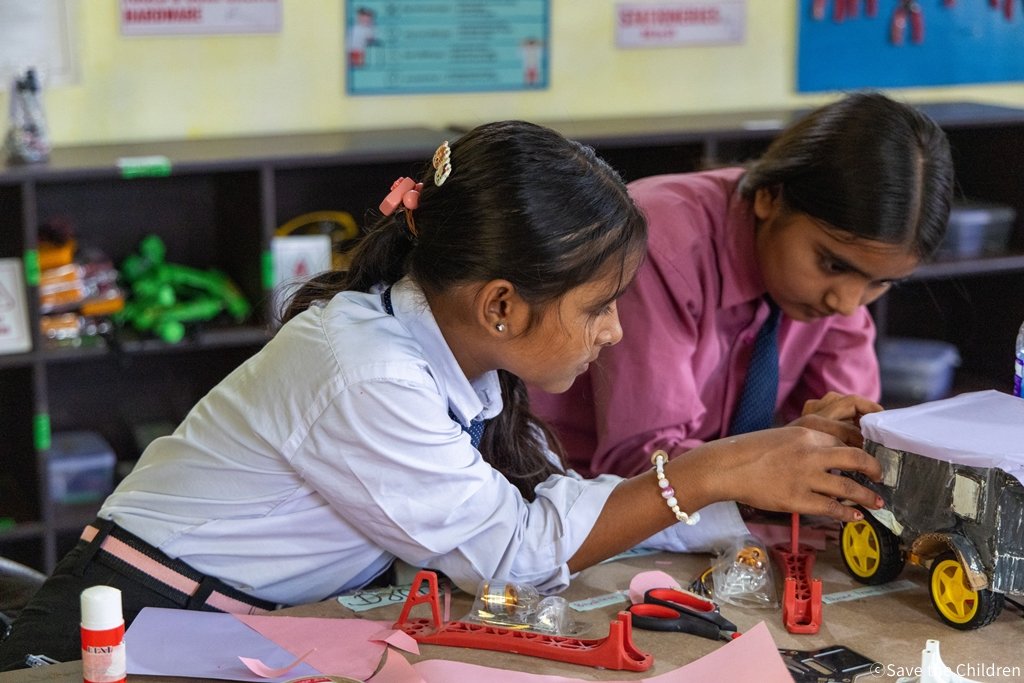
In Nepal's Madhesh province, where educational opportunities are scarce, a significant initiative is underway to uplift over 50,000 children and 740 out-of-school youth. The "INSPIRE" project, a collaboration between Save the Children and KOICA (Korea International Cooperation Agency), is tackling the critical issue of low basic literacy, which stands at a mere 13% for 5th graders in the region.
The project focuses on improving the fundamental learning environment by renovating and constructing classrooms and sanitation facilities in 81 schools. Additionally, it aims to bridge the learning gap by providing vocational and digital skills training, equipping young people for future employment. This is particularly crucial in Madhesh, which faces the highest unemployment rate in Nepal, exacerbated by poverty and inadequate educational infrastructure.
Participants are already seeing tangible benefits. One woman, after completing a three-month tailoring course, has successfully launched her own clothing business from home. Another individual, who received mobile phone repair training, is currently gaining practical experience through on-the-job training with the goal of opening his own repair shop.
Save the Children shared these success stories and project achievements at a one-year milestone event in Kathmandu. The initiative, funded with 12.2 billion won (approximately $9.3 million USD) from 2025 to 2029, is working in the Bara and Mahottari districts. Beyond facility improvements, the project has established technology labs in seven schools and introduced digital attendance systems, alongside training for teachers.
Looking ahead, the project plans to expand teacher professional development, enhance technology labs, and broaden vocational training. "All children and adolescents must receive quality education and benefit from the new opportunities created by digital transformation," said Oh Jun, Chairman of Save the Children. "We will pave the way for children and adolescents in economic and social blind spots to not be left behind and to move towards self-reliance through education."
DistantNews Editorial
Originally published by Dong-A Ilbo in Korean. Translated, summarized, and contextualized by our editorial team with added local perspective. Read our editorial standards.
More Stories


From Our Blog

What Gets Lost (and Found) When News Is Translated

The Critical Role of Diaspora Media in Global News

What Travellers Should Know About Countries with Restricted Press

A Digital Nomad's Guide to Following Local News

How the Same Story Looks Different in Different Countries
