


Nepal wants to become a clean-energy powerhouse, but Indigenous people are paying the price
Translated from English and summarized by DistantNews. Read the original for the full story.
At a glance
In-depth
Named sources
Ongoing story
- Nepal is rapidly expanding hydropower, with a roadmap targeting 28,500 megawatts over the next decade and billions of dollars in planned investment.
- Indigenous communities in Sankhuwasabha say construction has damaged ancestral land and forests without meaningful consultation.
- A deadly flash flood in another Himalayan hydropower region has highlighted the risks surrounding the country’s energy expansion.
On a winter night in 2023, Jojo Bhote woke to the sound of bulldozers tearing through stone walls on his family’s ancestral land beside the Chhujung river. The slopes had carried the sound of flowing water into his sleep for more than three decades. Now, heavy machinery was clearing the ground for the Chhujung Khola Hydropower Project.
Bhote and his neighbours confronted the workers. A company supervisor showed them papers with official seals and signatures, and Bhote says his own name appeared among them. “This is not mine,” he told the man. The supervisor shrugged and continued.
At dawn, the villagers followed the bulldozer tracks into the forest. The land Bhote had known since childhood was gouged open. It was also where his mother had taught him to gather Satuwa, a wild herb used to prepare a fever tonic. Nearby stood Lothsalla, the Himalayan yew protected by elders because it produces compounds used in anti-cancer medicines. “The forest was always our pharmacy,” Bhote says. “As much as our home.”
This is not mine
The project is part of a much larger push. Nepal, rich in water but poor in fossil fuels, is pursuing one of Asia’s most aggressive hydropower expansions. A government roadmap targets 28,500 megawatts over the next decade and is backed by $46.5 billion in investment. By July 2026, more than 197 plants were operating, 262 had construction licenses and 244 held survey licenses.
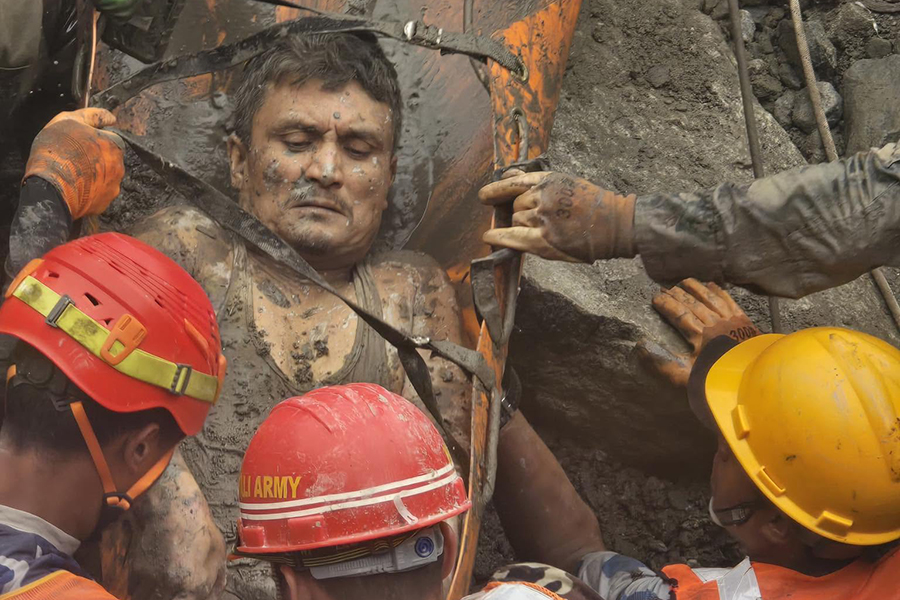
Rivers are increasingly being turned into power corridors carrying electricity to India and, more recently, Bangladesh. In communities such as Chyamtang, residents are questioning who will ultimately benefit. A flash flood last week in the Bhotekoshi river, hundreds of kilometres west in Rasuwa, killed at least 1,342 people and left nearly 5,000 unaccounted for as of Saturday. Hundreds were believed trapped in flooded hydropower tunnels as rescuers searched the wreckage, underscoring the risks accompanying Nepal’s energy ambitions.
The forest was always our pharmacy. As much as our home.
About this summary
Originally published by Kathmandu Post in English. Translated, summarized, and contextualized automatically by DistantNews, with a note on how the source frames the story. Not individually reviewed before publishing. How this works.
More Stories


From Our Blog

News in Translation: What Gets Lost, and How We Keep the Framing

Diaspora Media: How Communities Follow News From Home

Traveling Where the Press Is Not Free: How to Read the News There

The Digital Nomad's Guide to Local News

The Same Story, Different Countries: How Coverage Changes at the Border
