


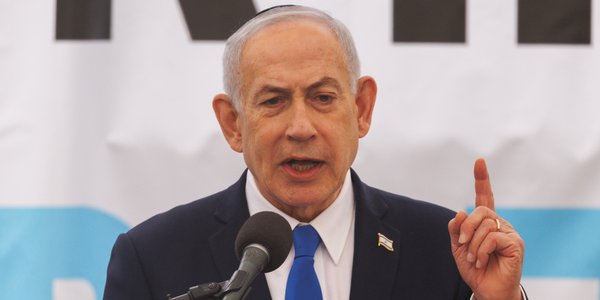
Netanyahu's war balance sheet: Israel's economy holds steady, but the prime minister loses ground
Translated from Polish, summarized and contextualized by DistantNews.
At a glance
News
Sources not specified
Context piece
- Prime Minister Benjamin Netanyahu faces declining political support amid ongoing wars, with polls showing his Likud party trailing rivals.
- Despite the costs of conflict, Israel's economy shows surprising resilience, with forecasts predicting solid GDP growth.
- Western funds are divesting from Israeli bonds due to activist pressure, while Israel prepares for potential shifts in U.S. support.
Prime Minister Benjamin Netanyahu, a veteran politician with 19 years in office, is facing significant political headwinds as polls indicate a decline in support for his Likud party. Recent surveys show Likud neck-and-neck with the centrist Yashar party, led by former IDF chief Gabi Eisenkot, who left Netanyahu's government over war strategy disagreements. Eisenkot's son was killed in Gaza. Public criticism of Netanyahu's handling of the ongoing wars is growing, with Israelis expressing dissatisfaction that he has not decisively defeated Iran-backed adversaries like Hezbollah or resolved the situation in Gaza. While the public does not seek peace with adversaries, there is a desire for more rapid and effective elimination of national enemies, and the prolonged conflicts are causing fatigue. Despite the geopolitical tensions and the economic strain of sustained warfare, Israel's economy has demonstrated remarkable resilience. The shekel has strengthened, and inflation has remained low, hovering around 1.9% in recent months. Although GDP saw a slight contraction of 0.8% in the first quarter, economic activity has rebounded in less intense periods of conflict. Economic forecasts remain positive, with the OECD predicting 3.3% GDP growth for the year, the IMF expecting 3.5%, and the Bank of Israel suggesting 4%. Analysts' projections, compiled by Bloomberg, range from 2.2% to 3.6%. This economic stability contrasts with the political challenges Netanyahu faces, including the divestment of Israeli bonds by some Western funds under activist pressure and Israel's strategic planning for potential shifts in U.S. support.
There must be a trampoline under the Holy Land. As soon as the rockets and fighting end, you see the Israeli public returning to restaurants, returning to activity. This normalization – going into a shelter for 15 minutes and returning to work – is an adaptation.
DistantNews Editorial
Originally published by Rzeczpospolita in Polish. Translated, summarized, and contextualized by our editorial team with added local perspective. Read our editorial standards.
More Stories


From Our Blog

What Gets Lost (and Found) When News Is Translated

The Critical Role of Diaspora Media in Global News

What Travellers Should Know About Countries with Restricted Press

A Digital Nomad's Guide to Following Local News

How the Same Story Looks Different in Different Countries
