

Nevis makes history with first Caribbean space life sciences experiment launch, Gov’t says
Summarized and contextualized by DistantNews.
At a glance
News
Official statement
New plan
- Nevis has launched its first space life sciences experiment, a significant milestone for the Caribbean region's participation in global space research.
- The experiment, a collaboration between Nevis' Ministry of Education, the University of Zurich, and the Center for Space and Aviation Switzerland and Liechtenstein, aims to understand how gravity changes affect human immune cells.
- The project involved four Nevisian science teachers working with international scientists, strengthening STEM education and establishing new research capabilities within the federation.
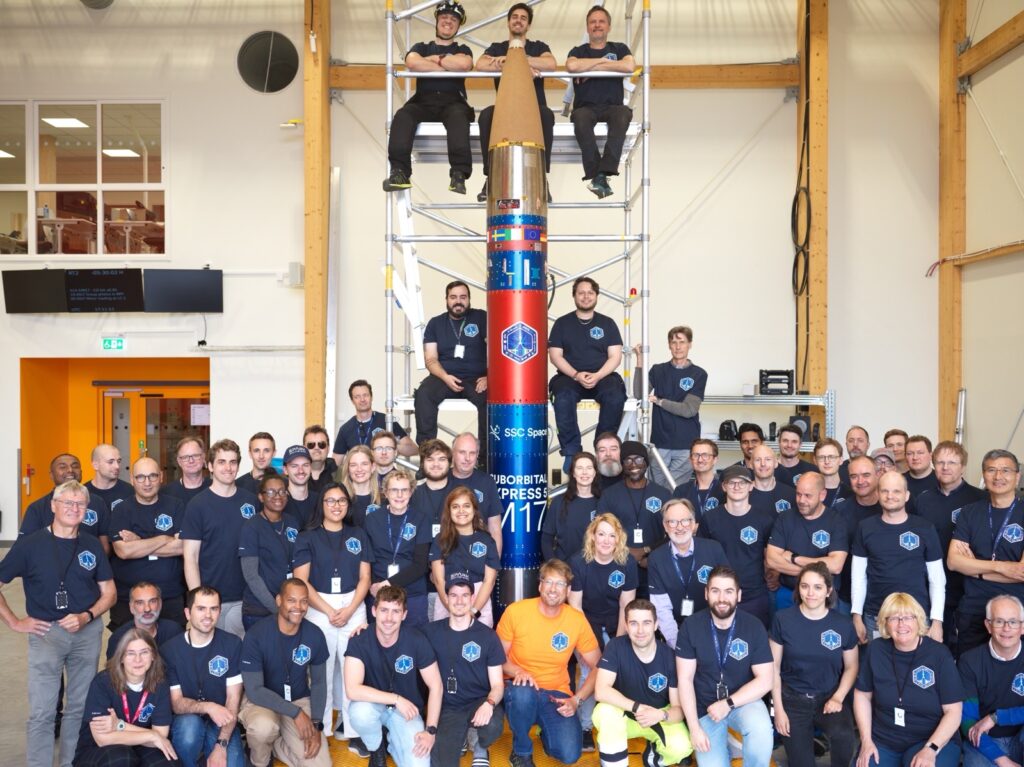
Nevis has achieved a historic milestone with the launch of its first space life sciences experiment, positioning the Caribbean nation among countries contributing to global space research. The experiment, part of the SSC SubOrbital Express SIX-5/M17 mission, lifted off from Sweden's Esrange Space Center on May 31, 2026.
Nevis has achieved a landmark milestone in science, education, and innovation with the successful launch of the first space life sciences experiment from the Caribbean region.
This landmark achievement is the result of a partnership between the Ministry of Education in Nevis, the University of Zurich (UZH), and the Center for Space and Aviation Switzerland and Liechtenstein (CSA). The government highlighted that this demonstrates how small island states can actively engage in cutting-edge scientific research and technological advancement.
The core objective of the experiment is to investigate the effects of altered gravity, specifically microgravity and hypergravity, on human immune cells. Researchers aim to examine changes in gene expression and cellular function, with the findings expected to advance international understanding of human health during spaceflight and long-duration missions.
The experiment seeks to better understand how changes in gravity affect human immune cells, examining the impact of microgravity and hypergravity on gene expression and cellular function.
Four science teachers from Nevis participated directly in the project, collaborating with leading international scientists. This hands-on involvement provided them with valuable experience in space research methodologies. The initiative has also led to the establishment of new laboratory facilities and research capabilities within Nevis, strengthening STEM education by connecting classroom learning with real-world scientific exploration. Officials emphasized the success of strategic partnerships in enabling Nevisian educators and students to contribute to global scientific innovation.
The mission marks a historic achievement not only for Nevis but for the wider Caribbean, demonstrating that small island states can play meaningful roles in cutting-edge scientific research and technological advancement.
DistantNews Editorial
Originally published by Jamaica Observer. Summarized and contextualized by our editorial team with added local perspective. Read our editorial standards.
More Stories
From Our Blog

What Gets Lost (and Found) When News Is Translated

The Critical Role of Diaspora Media in Global News

What Travellers Should Know About Countries with Restricted Press

A Digital Nomad's Guide to Following Local News

How the Same Story Looks Different in Different Countries
