

New Cave Discovery in Antalya Prompts Mapping Study Amid Quarrying Concerns
Translated from Turkish, summarized and contextualized by DistantNews.
At a glance
News
Sources not specified
Ongoing story
- A new cave discovery has prompted a mapping study in Antalya, Turkey.
- The cave contains formations like stalactites and ongoing galleries, with its end yet to be reached.
- Concerns exist about potential damage from nearby quarrying activities.
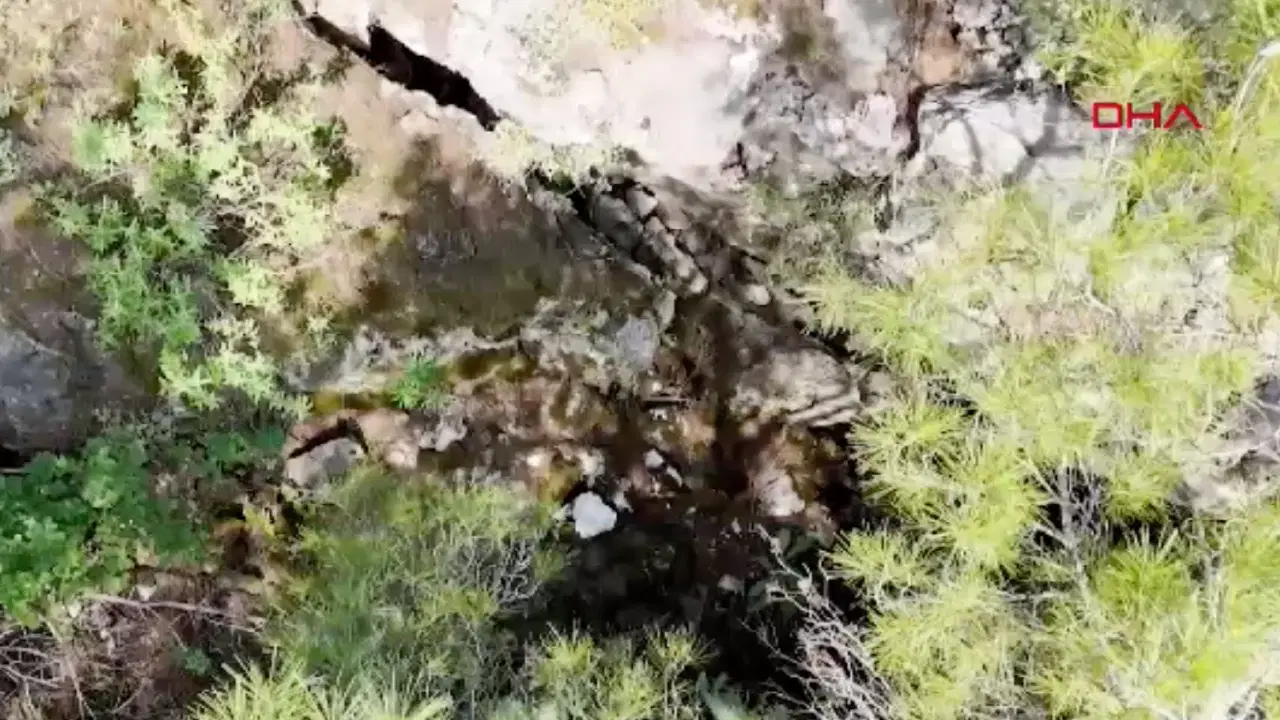
A significant new cave discovery near Antalya, Turkey, has prompted the Turkish Caving Federation to initiate a mapping study. The initial descent revealed a 14-meter vertical drop, leading into a space adorned with stalactites, stalagmites, and extensive galleries that continue deeper into the earth.
Now, on the same line, a new and unregistered cave has emerged right at the license boundary.
The cave's exploration is ongoing, with its full extent yet to be determined. It is located approximately 3 kilometers from the İsli (Karaindibi) Cave, an area known for its historical wall paintings and expanded protection zone. The discovery was made by cavers from the federation and local environmental volunteers.
The area around the newly discovered cave is noteworthy not only for its natural formations but also for its cultural landscape.
Environmental groups, including the Geyikbayırı Living Platform, have raised urgent concerns. They point out that the new cave was found near the boundary of a licensed quarrying area. The use of open-pit mining and blasting methods in the vicinity poses a serious risk of irreversible damage to the newly discovered cave, its surrounding forest ecosystem, and nearby ancient archaeological sites, including an ancient farm settlement and remnants of a paved road.
The cave entrance, its surroundings, and nearby archaeological elements need urgent examination by experts.
These groups are calling for immediate action from relevant authorities. They demand that the new cave and its surroundings be evaluated urgently, incorporating mapping reports from the Caving Federation and expert opinions from archaeologists and geologists. They advocate for the initiation of a formal registration process for the cave and a reassessment of the protection boundaries, considering both the existing İsli Cave protection area and the newly found cave.
The main problem is this: the existence of this cave was not known when the protection boundaries were determined.
DistantNews Editorial
Originally published by Cumhuriyet in Turkish. Translated, summarized, and contextualized by our editorial team with added local perspective. Read our editorial standards.
More Stories


From Our Blog

What Gets Lost (and Found) When News Is Translated

The Critical Role of Diaspora Media in Global News

What Travellers Should Know About Countries with Restricted Press

A Digital Nomad's Guide to Following Local News

How the Same Story Looks Different in Different Countries
