


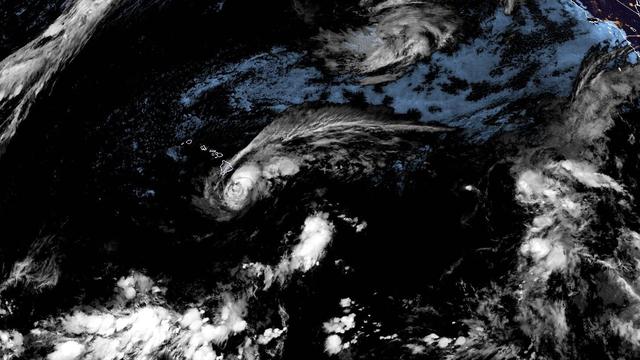
New European weather satellite launched to improve storm warnings
Translated from German and summarized by DistantNews. Read the original for the full story.
At a glance
News
Sources not specified
New plan
- The new European weather satellite, Meteosat Third Generation Imager-2 (MTG-I2), has been launched into space from French Guiana.
- The satellite aims to enhance warnings for storms, flash floods, and assist in monitoring wildfires.
- MTG-I2 will provide images of Europe and North Africa more frequently than its predecessors, sending a new image every 2.5 minutes.
Europe has launched its latest weather satellite, Meteosat Third Generation Imager-2 (MTG-I2), into orbit from the European spaceport in Kourou, French Guiana. Aboard an Ariane-6 rocket, the 3.8-ton satellite is set to significantly improve early warnings for severe weather events like storms and flash floods, and aid in the monitoring of active wildfires.
MTG-I2 is part of a new generation of weather satellites designed to provide more frequent and detailed imagery. While its predecessor Imager covers the entire Earth, MTG-I2 will focus on Europe and North Africa. It is designed to send a new image every two and a half minutes, a much higher frequency than previous satellites, allowing for quicker detection of rapidly developing phenomena such as storm clouds, wildfire hotspots, and volcanic ash plumes.
With the new satellite, we get a film of it. That's better than just a snapshot every ten minutes.
This enhanced capability will benefit national weather services, including the German Weather Service (DWD). Ulrich Blahak from the DWD highlighted the advantage of receiving near real-time "film" of developing thunderstorms, rather than just occasional snapshots. This increased frequency and detail could allow meteorologists to anticipate severe weather up to fifteen minutes earlier, improving short-term forecasts and warnings for hail, flash floods, and strong winds.
Developed by the European Space Agency (ESA) for the European Organisation for the Exploitation of Meteorological Satellites (Eumetsat), MTG-I2 is expected to have a lifespan of over ten years. It joins an existing constellation that includes a first Imager and a Sounder satellite, working together to provide comprehensive atmospheric data from an altitude of 36,000 kilometers.
Thunderstorms develop very quickly. With the new satellite, we get a film of it. That's better than just a snapshot every ten minutes.
About this summary
Originally published by Die Zeit in German. Translated, summarized, and contextualized automatically by DistantNews, with a note on how the source frames the story. Not individually reviewed before publishing. How this works.
More Stories


From Our Blog

What Gets Lost (and Found) When News Is Translated

How the Same Story Looks Different in Different Countries

The Critical Role of Diaspora Media in Global News

What Travellers Should Know About Countries with Restricted Press

A Digital Nomad's Guide to Following Local News
