

New Hyundai i20 changes approach, adopts crossover-like styling
Translated from French, summarized and contextualized by DistantNews.
At a glance
News
Sources not specified
New plan
- The fourth generation of the Hyundai i20 has been unveiled in Brazil, marking a significant shift in its design and dimensions.
- The new i20 adopts a more elevated, crossover-like stance with angular lines and distinctive lighting, moving away from its previous city car identity.
- Inside, it features a dual 12.3-inch screen setup for instrumentation and infotainment, and it will be powered by two 1.0-liter, 3-cylinder engines capable of running on gasoline or ethanol.
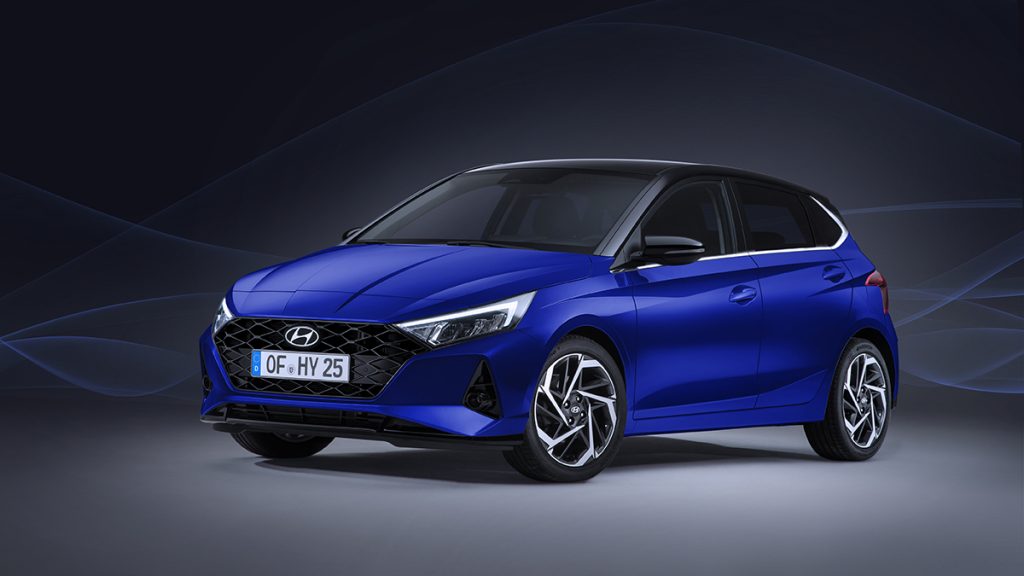
Hyundai has introduced the fourth generation of its i20 model in Brazil, revealing a vehicle that dramatically departs from its predecessor's identity. This new iteration sheds its compact city car image, growing in size and adopting styling cues that align it more closely with the crossover segment.
The redesigned i20 now measures 4.13 meters in length and stands 1.50 meters tall. Its exterior is characterized by sharp, angular lines, with distinctive beveled headlights and taillights. A notable design element is the illuminated strips that traverse the front fascia and the tailgate, enhancing its modern aesthetic. These changes collectively give the i20 a more substantial presence, evoking the look of a raised compact car.
Inside, the cabin has been significantly updated with a focus on technology and space. The dashboard is dominated by a dual-screen configuration, with two 12.3-inch displays serving as the digital instrument cluster and the infotainment system. Hyundai has also prioritized maximizing interior space to enhance habitability for occupants.
Under the hood, the new i20 will be offered with two 1.0-liter, three-cylinder engines. Both variants benefit from bicarburation, allowing them to run on either gasoline or ethanol. The base engine produces 75 horsepower on gasoline, increasing to 80 horsepower when running on ethanol. A more powerful option delivers 115 horsepower, regardless of the fuel used.
DistantNews Editorial
Originally published by El Watan in French. Translated, summarized, and contextualized by our editorial team with added local perspective. Read our editorial standards.
More Stories



From Our Blog

What Gets Lost (and Found) When News Is Translated

The Critical Role of Diaspora Media in Global News

What Travellers Should Know About Countries with Restricted Press

A Digital Nomad's Guide to Following Local News

How the Same Story Looks Different in Different Countries
