

New order after Mecca treaty: Balance of power, not bandwagoning
Summarized and contextualized by DistantNews.
At a glance
Analysis
Sources not specified
New plan
- The Mecca Alliance Treaty, signed by Türkiye, Saudi Arabia, and Pakistan, prompts a re-evaluation of international relations concepts.
- The treaty's implications are being analyzed through the lenses of balance of power, bandwagoning, and strategic autonomy.
- Questions arise whether the treaty challenges U.S. hegemony or reflects new geopolitical realities.
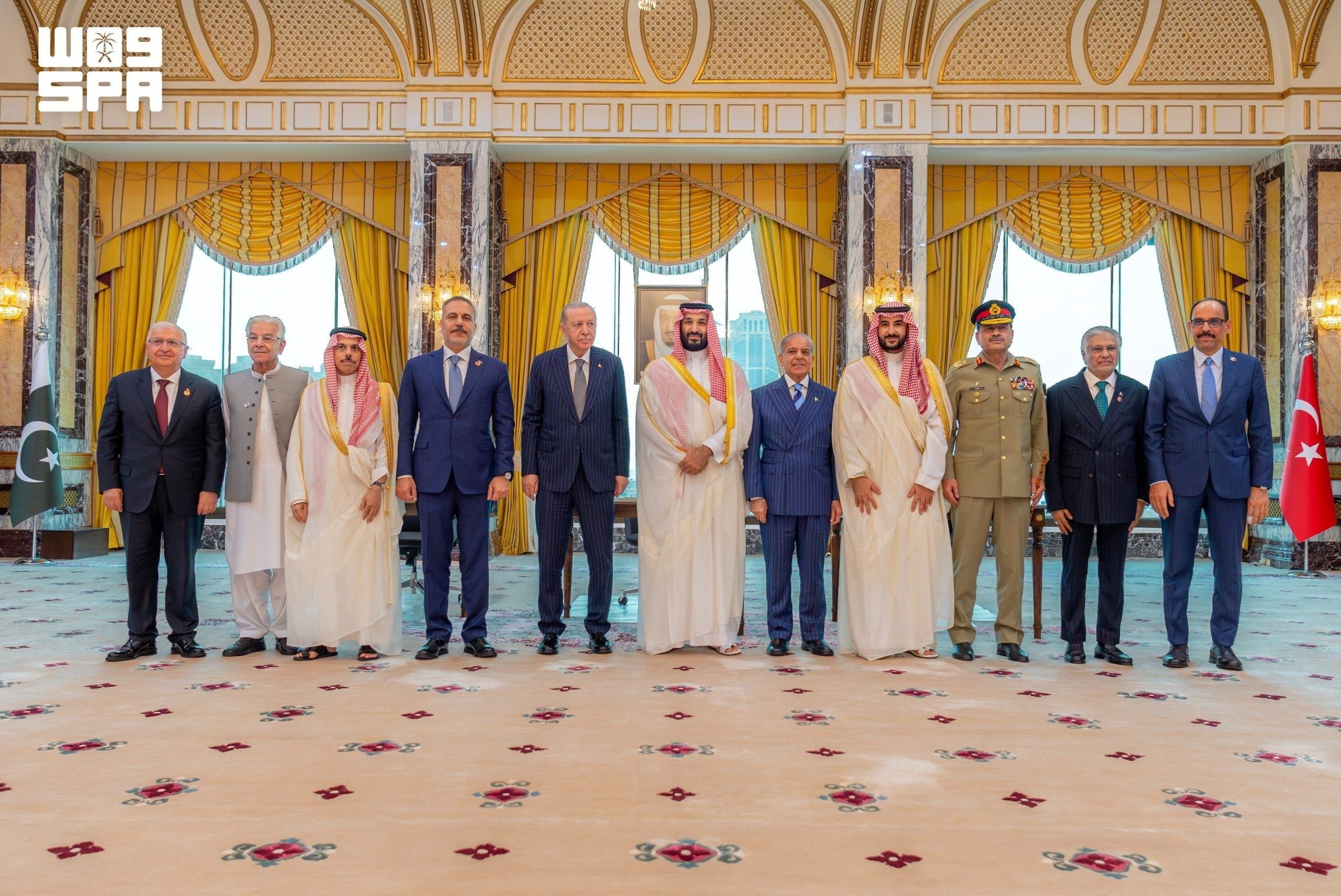
The recent signing of the Mecca Alliance Treaty on August 7 by Türkiye, Saudi Arabia, and Pakistan has sparked a renewed discussion on fundamental concepts in international politics. The treaty's emergence prompts a critical examination of established theories such as the balance of power and bandwagoning, and their relevance in the post-Cold War era.
Traditionally, the balance of power theory suggests that states form alliances to counter shared threats, pooling resources for collective security. Conversely, bandwagoning involves aligning with a dominant power to benefit from its strength. During the Cold War, these dynamics fueled polarization, forcing smaller states to align with hegemonic powers like the U.S. or the Soviet Union, often at the cost of their autonomy.
In the current international system, discussions have shifted towards regional powers and the concept of "middle powers." The idea of strategic autonomy challenges the traditional boundaries of these middle powers, raising questions about when states shift from bandwagoning to pursuing independent foreign policies. The U.S., as the current hegemonic power, has voiced criticism of an "axis shift," indicating its efforts to maintain control over these middle powers.
The Mecca Treaty's significance is being debated: Does it challenge the existing international order under U.S. hegemony, or is it a pragmatic response to evolving geopolitical realities? Analysts are exploring whether the treaty aligns with Huntington's "Clash of Civilizations" thesis, particularly the concept of "Islamic Civilization," or if it is a manifestation of state-centered realpolitik. The treaty's potential as a new political formation and its aftershocks are subjects of ongoing analysis.
DistantNews Editorial
Originally published by Daily Sabah. Summarized and contextualized by our editorial team with added local perspective. Read our editorial standards.
More Stories


From Our Blog

What Gets Lost (and Found) When News Is Translated

The Critical Role of Diaspora Media in Global News

What Travellers Should Know About Countries with Restricted Press

A Digital Nomad's Guide to Following Local News

How the Same Story Looks Different in Different Countries
