


New Sternbrücke: Done: Hamburg's bridge colossus has reached its goal
Translated from German, summarized and contextualized by DistantNews.
At a glance
News
From a news agency
Outcome reported
- Hamburg has successfully installed the new Sternbrücke bridge, a 3,700-ton structure.
- The 108-meter-long bridge was transported and lifted into place over the weekend, despite initial delays.
- Remaining work includes installing tracks, overhead lines, and signals, with the bridge expected to reopen for traffic by the end of August.
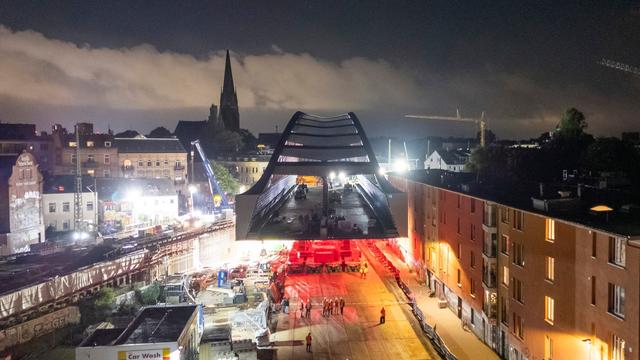
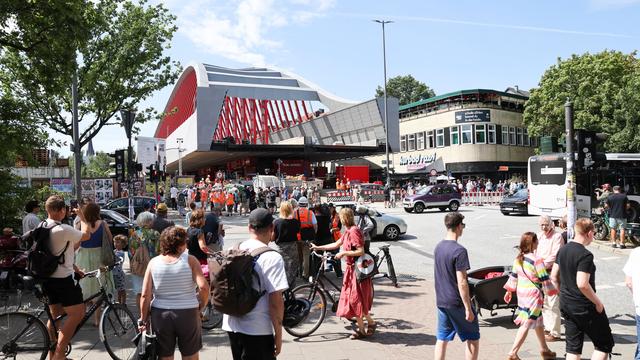
Hamburg has completed the installation of the new Sternbrücke, a massive 3,700-ton steel structure. The final 500-meter transport along Max-Brauer-Allee was successfully completed early Friday, followed by the precise lifting of the 108-meter-long and 21-meter-wide bridge into its final position.
a central point in the European rail network and also in our city
Although the work was originally scheduled to finish Thursday evening, transport issues caused a delay. The colossal structure moved on 48 self-propelled modular transporters, utilizing 1,088 steerable wheels. To facilitate the passage, the road was raised by approximately 60 centimeters and reinforced with steel plates. During the transport, streetlights were removed, a gas station canopy was trimmed, and 86 trees were felled.
With the main structure in place, the remaining tasks involve laying ballast, installing railway tracks, overhead power lines, and signaling systems. This work is crucial for the bridge's planned reopening at the end of August. Once operational, the bridge will support approximately 1,000 trains daily, carrying an estimated 90,000 passengers, alongside around 23,000 cars and 5,000 cyclists passing underneath.
a landmark for the Schanzenviertel for the next 100 years
Transport Senator Anjes Tjarks hailed the new railway overpass in the Altona district as a vital hub in the European rail network and for the city itself. He praised the coordination efforts of the involved companies and the railway subsidiary InfraGo. Tjarks described the Sternbrücke as a landmark for the Schanzenviertel neighborhood, expected to serve for the next 100 years and potentially become an icon for Hamburg. He also noted that efforts are underway to transform the area under the bridge into a cultural space once Max-Brauer-Allee is restored, similar to its past function for music clubs that were displaced when the approximately 100-year-old predecessor bridge, deemed irreparable, was demolished.
Until then it is still a way, but we are on it.
DistantNews Editorial
Originally published by Die Zeit in German. Translated, summarized, and contextualized by our editorial team with added local perspective. Read our editorial standards.
More Stories
From Our Blog

What Gets Lost (and Found) When News Is Translated

How the Same Story Looks Different in Different Countries

The Critical Role of Diaspora Media in Global News

What Travellers Should Know About Countries with Restricted Press

A Digital Nomad's Guide to Following Local News
