


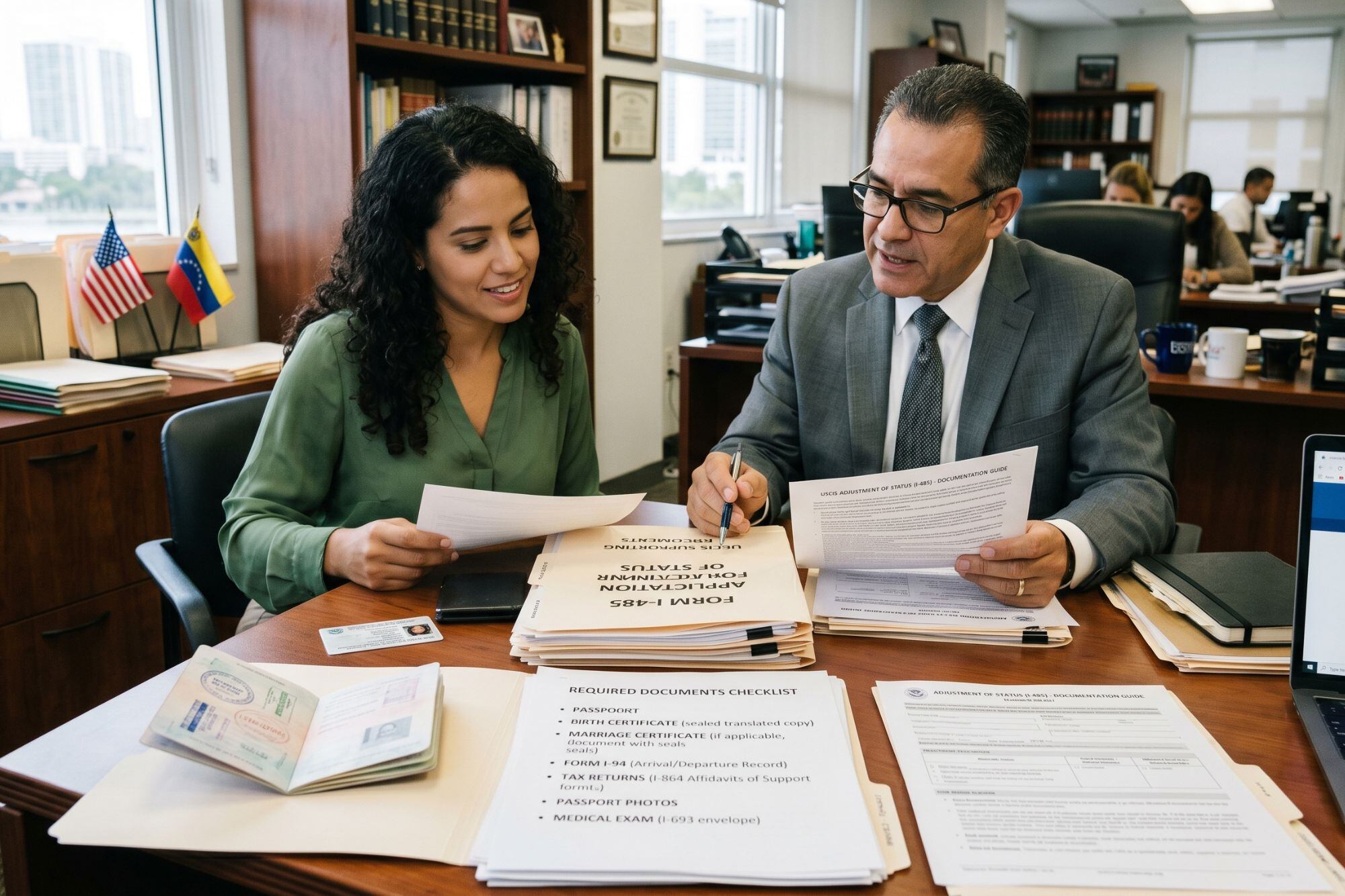
New USCIS guidelines detail key documents for green card adjustment of status
Translated from Spanish, summarized and contextualized by DistantNews.
At a glance
News
Named sources
New plan
- The U.S. Citizenship and Immigration Services (USCIS) has issued new internal guidelines for evaluating green card adjustment of status applications.
- Immigration lawyer Jesús Reyes highlighted key documents for applicants, emphasizing proof of good moral character and legal entry.
- The new guidelines reaffirm USCIS officers' existing discretionary authority to approve or deny applications for adjustment of status within the U.S.
The U.S. Citizenship and Immigration Services (USCIS) has released new internal guidelines, outlined in memorandum PM-602-0199, that establish criteria for evaluating applications seeking an adjustment of status for a green card. Amidst ongoing uncertainties surrounding immigration processes, immigration lawyer Jesús Reyes has identified crucial documents that applicants may need. He stressed the importance of verifying eligibility requirements before submission, as many applications are rejected for failing to meet basic conditions.
Reyes emphasized that applicants should prepare evidence of good moral character, such as FBI background checks and recommendation letters. Additionally, he highlighted the necessity of providing proof of legal entry into the U.S. and tax payment records. "The necessary documents depend on each case," Reyes told LA NACION, adding that a background check with the FBI or local police can be beneficial.
For individuals married to U.S. citizens, Reyes noted that applicants must demonstrate the legitimacy of their marriage to immigration officials. He clarified that the PM-602-0199 memorandum does not introduce new regulations but rather reinforces the existing discretionary authority of USCIS officers. A Department of Homeland Security spokesperson confirmed to The New York Times that the memo serves as a reminder of this authority, which has always allowed for case-by-case evaluations.
DistantNews Editorial
Originally published by La Nación in Spanish. Translated, summarized, and contextualized by our editorial team with added local perspective. Read our editorial standards.
More Stories

From Our Blog

What Gets Lost (and Found) When News Is Translated

The Critical Role of Diaspora Media in Global News

What Travellers Should Know About Countries with Restricted Press

A Digital Nomad's Guide to Following Local News

How the Same Story Looks Different in Different Countries
