


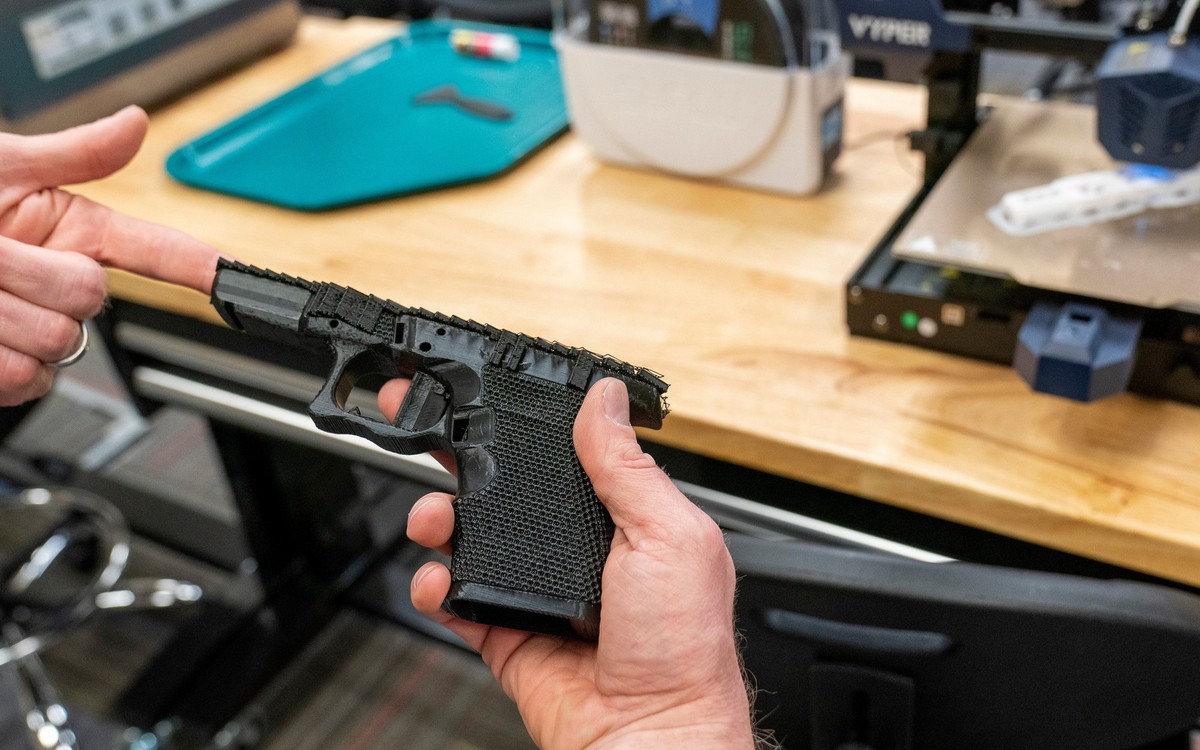
New York Seeks to Block 3D Printers from Producing Untraceable Guns
Translated from Vietnamese, summarized and contextualized by DistantNews.
At a glance
News
Named sources
New plan
- New York is considering a law to integrate technology into 3D printers that can detect and block 3D gun designs.
- The proposed software would scan designs, compare them to a gun parts database, and refuse to print if a high similarity is found.
- Critics question the technology's effectiveness, citing potential workarounds and false positives, while gun control advocates support it and the NRA opposes it.
New York is exploring a novel approach to combat the proliferation of untraceable 3D-printed firearms, commonly known as "ghost guns." The state is considering a law that would require 3D printers to incorporate technology capable of detecting and preventing the printing of gun designs.
Under the proposed legislation, software integrated into 3D printers would analyze submitted designs. This software would cross-reference the designs against a database of gun components. If a significant match is detected, the printer would be programmed to reject the print command, effectively blocking the creation of firearms.
This technological intervention aims to address the rising number of homemade firearms seized in crimes. According to the U.S. Department of Justice, the number of such weapons confiscated increased dramatically from approximately 1,600 in 2017 to nearly 27,500 in 2023. The exact number produced by 3D printers is not specified.
However, the proposed measure faces skepticism. Bill Decker, CEO of the 3D Printing Association, expressed doubts about its practical efficacy, suggesting that individuals intent on manufacturing guns could modify designs or print them elsewhere. Experts also warn of potential false positives, where the system might mistakenly identify legitimate objects as gun parts, thereby blocking non-weapon-related prints. Privacy concerns regarding users' creative designs and proprietary products have also been raised.
Gun control advocacy groups have lauded the new measure as a way to restrict access to firearms for individuals prohibited from owning them legally. Conversely, the National Rifle Association (NRA) opposes the regulations, arguing they would infringe upon the rights of law-abiding citizens protected by the Constitution. The law is not slated for implementation before 2029, and its deployment could be delayed further if experts deem the technology unfeasible.
Those who intend to make guns can still change the design or find a way to print elsewhere to overcome the technical barriers.
DistantNews Editorial
Originally published by Tuổi Trẻ in Vietnamese. Translated, summarized, and contextualized by our editorial team with added local perspective. Read our editorial standards.
More Stories



From Our Blog

What Gets Lost (and Found) When News Is Translated

The Critical Role of Diaspora Media in Global News

What Travellers Should Know About Countries with Restricted Press

A Digital Nomad's Guide to Following Local News

How the Same Story Looks Different in Different Countries
