

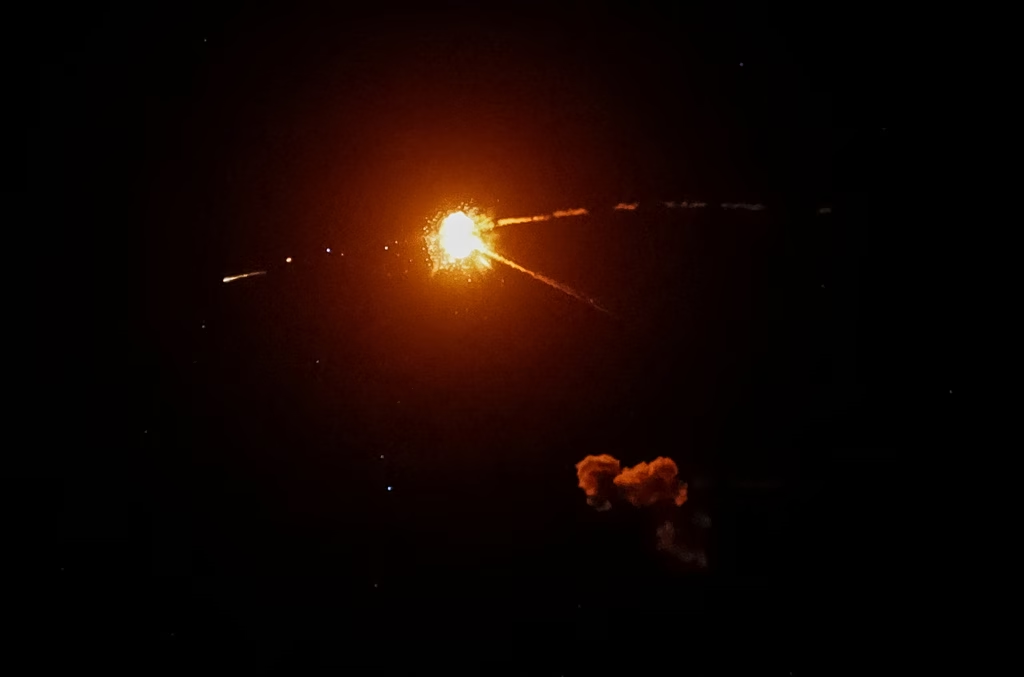

New York Times: U.S. Used Powerful Bomb on Civilians in Iran
Translated from Greek, summarized and contextualized by DistantNews.
At a glance
News
Named sources
Under investigation
- The New York Times reports the U.S. used one of its most powerful conventional bombs on a residential building in Iran's Qeshm Island.
- Satellite analysis and expert assessments suggest the bomb was a 2,000-pound MK-84, resulting in three deaths.
- U.S. Central Command acknowledged the incident and is investigating, reiterating that U.S. forces do not target civilians.
The United States deployed one of its most potent conventional bombs in an airstrike on a residential building on Iran's Qeshm Island, resulting in the deaths of three people, according to a New York Times report. Satellite analysis and expert assessments of the blast crater and munitions fragments indicate the use of an MK-84 bomb, weighing approximately 2,000 pounds.
The strike occurred in a densely populated neighborhood, and there were no indications of military installations in the vicinity. The New York Times published a visual investigation detailing the incident, which reportedly killed a husband, wife, and their two-year-old son, while two other children were pulled from the rubble alive. The crater and fragments are consistent with a U.S.-made Mark-84 bunker-buster bomb.
The U.S. military leadership has been made aware of the incident and is investigating the case.
U.S. Central Command spokesperson Captain Tim Hawkins told the New York Times that military leadership is aware of the incident and is investigating. He reiterated the U.S. military's stance that it does not target civilians. This event comes after the U.S. and Iran signed a memorandum of understanding in June for an immediate cessation of hostilities, though American operations resumed in July amid U.S. accusations that Tehran violated agreements concerning the Strait of Hormuz.
The United States does not target civilians.
DistantNews Editorial
Originally published by Ta Nea in Greek. Translated, summarized, and contextualized by our editorial team with added local perspective. Read our editorial standards.
More Stories


From Our Blog

What Gets Lost (and Found) When News Is Translated

The Critical Role of Diaspora Media in Global News

What Travellers Should Know About Countries with Restricted Press

A Digital Nomad's Guide to Following Local News

How the Same Story Looks Different in Different Countries
