


Newborns Eligible for 'High Oil Price Relief Fund' Based on Birth Dates
Translated from Korean, summarized and contextualized by DistantNews.
TLDR
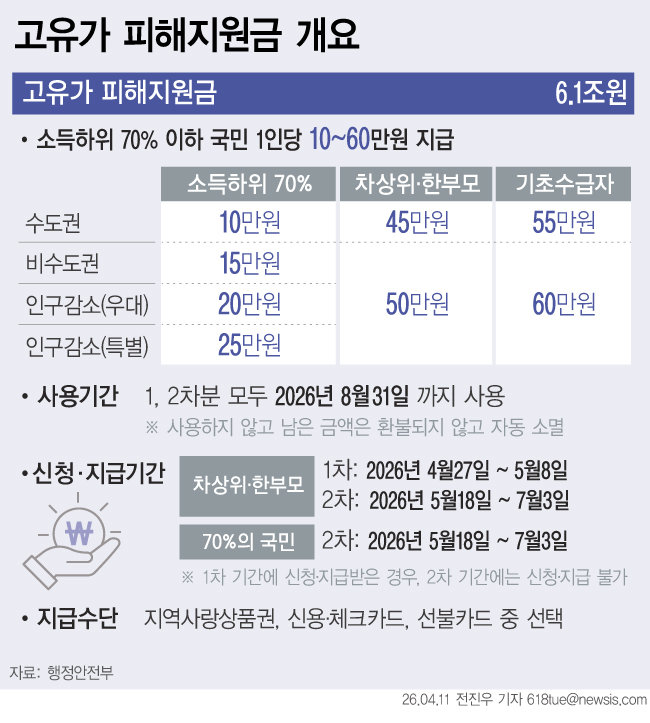
- South Korea is implementing a "high oil price damage relief fund" to support citizens affected by rising energy costs.
- The fund provides 100,000 to 600,000 won per person, with eligibility and application methods varying based on birth dates.
- Babies born after July 18 are excluded, while those born before March 30 can be automatically included if their household head applies; others born between March 31 and July 17 must file an objection.
The South Korean government has introduced a "high oil price damage relief fund" to cushion the impact of soaring energy prices on its citizens. This initiative, part of a broader effort to support the population, aims to provide financial assistance to those most affected by the economic fallout. However, the distribution mechanism has sparked some discussion, as the eligibility and application process are intricately tied to the birth dates of recipients, particularly for newborns.
According to the Ministry of the Interior and Safety, the relief fund will range from 100,000 to 600,000 won per person, with priority given to vulnerable groups such as the lowest income brackets and single-parent families. The key point of contention, or at least a point of administrative complexity, lies in how the fund applies to infants. For babies born before March 30, they are automatically included if their household head applies for the fund. This streamlines the process for families with newborns already registered in household records.
However, for infants born after March 30 but before July 18, a more convoluted objection process is required. Parents must file an objection by July 17 to ensure their child is included in the relief program. This distinction, particularly the exclusion of babies born after July 18, has raised questions about the fairness and practicality of the system. While the government cites administrative deadlines and registration cutoffs, the differing treatment based on precise birth dates highlights the challenges in implementing such large-scale support programs equitably.
From a local perspective, the fund is a welcome, albeit modest, measure to alleviate financial burdens. The government's attempt to balance support with administrative feasibility is evident. However, the nuanced application for newborns underscores the need for clear communication and accessible procedures to ensure that all eligible citizens, especially the most vulnerable, can benefit from the relief. The differing treatment based on birth dates, while perhaps administratively necessary, could lead to confusion and frustration for some families, a common challenge in South Korea's highly organized yet sometimes rigid bureaucratic system.
DistantNews Editorial
Originally published by Dong-A Ilbo in Korean. Translated, summarized, and contextualized by our editorial team with added local perspective. Read our editorial standards.
More Stories

From Our Blog

What Gets Lost (and Found) When News Is Translated

The Critical Role of Diaspora Media in Global News

What Travellers Should Know About Countries with Restricted Press

A Digital Nomad's Guide to Following Local News

How the Same Story Looks Different in Different Countries
