

Nicaragua: Votes Likely, Elections Definitely Not
Translated from Spanish, summarized and contextualized by DistantNews.
At a glance
Analysis
Named sources
New plan
- Nicaraguan President Daniel Ortega declared elections would not occur, citing opposition and U.S. backing.
- The National Assembly president later clarified elections would proceed under a new constitutional framework to "shield" them from foreign interference.
- This move institutionalizes the elimination of electoral competition by excluding "denationalized" opposition figures, effectively meaning votes will be cast but no real choice will be made.
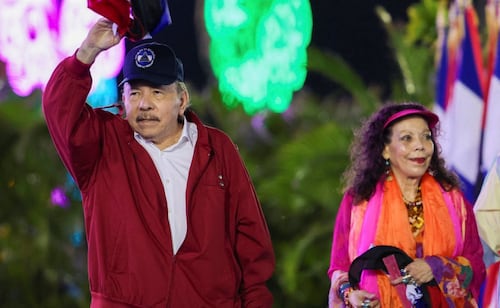
Nicaragua's regime under Daniel Ortega and Rosario Murillo has executed a subtle but significant shift regarding elections. Initially, Ortega declared that "elections will not happen again" in Nicaragua, framing it as a defense against an opposition allegedly backed by Washington. However, this was quickly followed by a clarification from the president of the National Assembly, Gustavo Porras, stating that elections would indeed take place, but within a "new constitutional framework" designed to "shield" them from foreign interference and perceived "traitors to the homeland."
Rosario Murillo, the co-president, confirmed that a partial constitutional reform would be presented for consultation in August and approved in early September. This sequence of announcements was not contradictory but rather a procedural adjustment to the same underlying content: Ortega is not abandoning the goal of eliminating electoral competition; he is institutionalizing its exclusion under a procedural guise that allows the government to continue speaking of "elections" without the risk of losing them. This distinction, voting without choosing, is not unique to Nicaragua and has historical precedents in contemporary authoritarianism.
The proposed reform, to be approved by the Sandinista-controlled National Assembly, explicitly aims to disqualify "denationalized opposition figures." These are individuals stripped of their citizenship for opposing the regime. While the official justification is defending national sovereignty against "foreign interference," the practical effect is the constitutionalization of a purge already underway since 2018. This purge includes denationalization, asset confiscation, cancellation of legal status for parties and civil organizations, and forcing dissidents into exile.
The true novelty lies not in the repression itself, which has resulted in hundreds of deaths, thousands of political prisoners, and exiles since the April 2018 protests, but in its codification within the constitution. When exclusion is enshrined in the Magna Carta, it transforms from an exceptional measure into a permanent rule of the system. Ortega and Murillo effectively ensure no viable opposition candidates or eligible voters can challenge election results months before the vote, rendering electoral fraud on election day unnecessary.
DistantNews Editorial
Originally published by El Universal in Spanish. Translated, summarized, and contextualized by our editorial team with added local perspective. Read our editorial standards.
More Stories
From Our Blog

What Press Freedom Means for the News You Read

What Gets Lost (and Found) When News Is Translated

The Critical Role of Diaspora Media in Global News

What Travellers Should Know About Countries with Restricted Press

A Digital Nomad's Guide to Following Local News
