


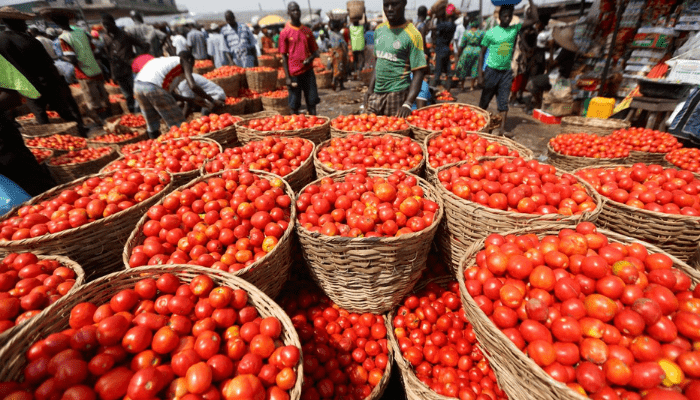
Nigeria may face rice, tomato scarcity in 3 months — OTACCWA
Summarized and contextualized by DistantNews.
At a glance
News
Named sources
Context piece
- Nigeria may face shortages of rice, tomatoes, and other staple foods within three months, according to an expert.
- Declining production, reduced planting, and rising transport costs are contributing factors.
- Insecurity in food-producing regions and inadequate storage infrastructure are also blamed for the potential shortages.
Nigerians could experience shortages of rice, tomatoes, and other essential foods within the next three months, warns Alexander Isong, President of the Organisation for Technology Advancement of Cold Chain in West Africa (OTACCWA).
Rice is the big one. Production is projected to drop six per cent to 8.3 million tonnes. The area planted is down seven per cent to 4.2 million hectares. The United States Department of Agriculture confirms a five per cent decrease year-on-year. Tomatoes are another headache.
Isong, who is also the country director for the Nigeria World Agriculture Forum, stated that rice production is projected to fall by six percent to approximately 8.3 million tonnes. The area dedicated to rice cultivation is also expected to decrease by seven percent. The United States Department of Agriculture reportedly confirms a five percent year-on-year decrease. Tomatoes are also a significant concern, with shortages anticipated to last until the late harvest season in October.
Further compounding the issue, maize, sorghum, and millet may also face supply pressures due to reduced planting in 2025. Isong highlighted the dramatic increase in transportation costs, noting that moving a tonne of grain from Kano to Lagos now costs 70,000 Nigerian naira, up from 45,000 naira, with some routes seeing fares double or triple. Onions and peppers are already experiencing limited supply and price hikes.
Moving a tonne of grain from Kano to Lagos now costs N70,000. It used to be N45,000. On some routes, transport fares have doubled or even tripled. Energy is another killer.
Isong attributed the growing food supply challenges to insecurity, declining production, supply chain disruptions, and inadequate storage infrastructure. He emphasized that thousands of farmers have been displaced in northern Nigeria, disrupting farming activities and reducing agricultural output. "Insecurity in major food-producing areas must be addressed," Isong stated, adding that farmers cannot produce food if they cannot access their farms safely. He also called for reduced transportation and logistics costs to help stabilize food supplies.
Insecurity in major food-producing areas must be addressed. Farmers cannot produce enough food if they are unable to access their farms safely.
DistantNews Editorial
Originally published by Vanguard. Summarized and contextualized by our editorial team with added local perspective. Read our editorial standards.
More Stories


From Our Blog

How the Same Story Looks Different in Different Countries

What Gets Lost (and Found) When News Is Translated

The Critical Role of Diaspora Media in Global News

What Travellers Should Know About Countries with Restricted Press

A Digital Nomad's Guide to Following Local News
